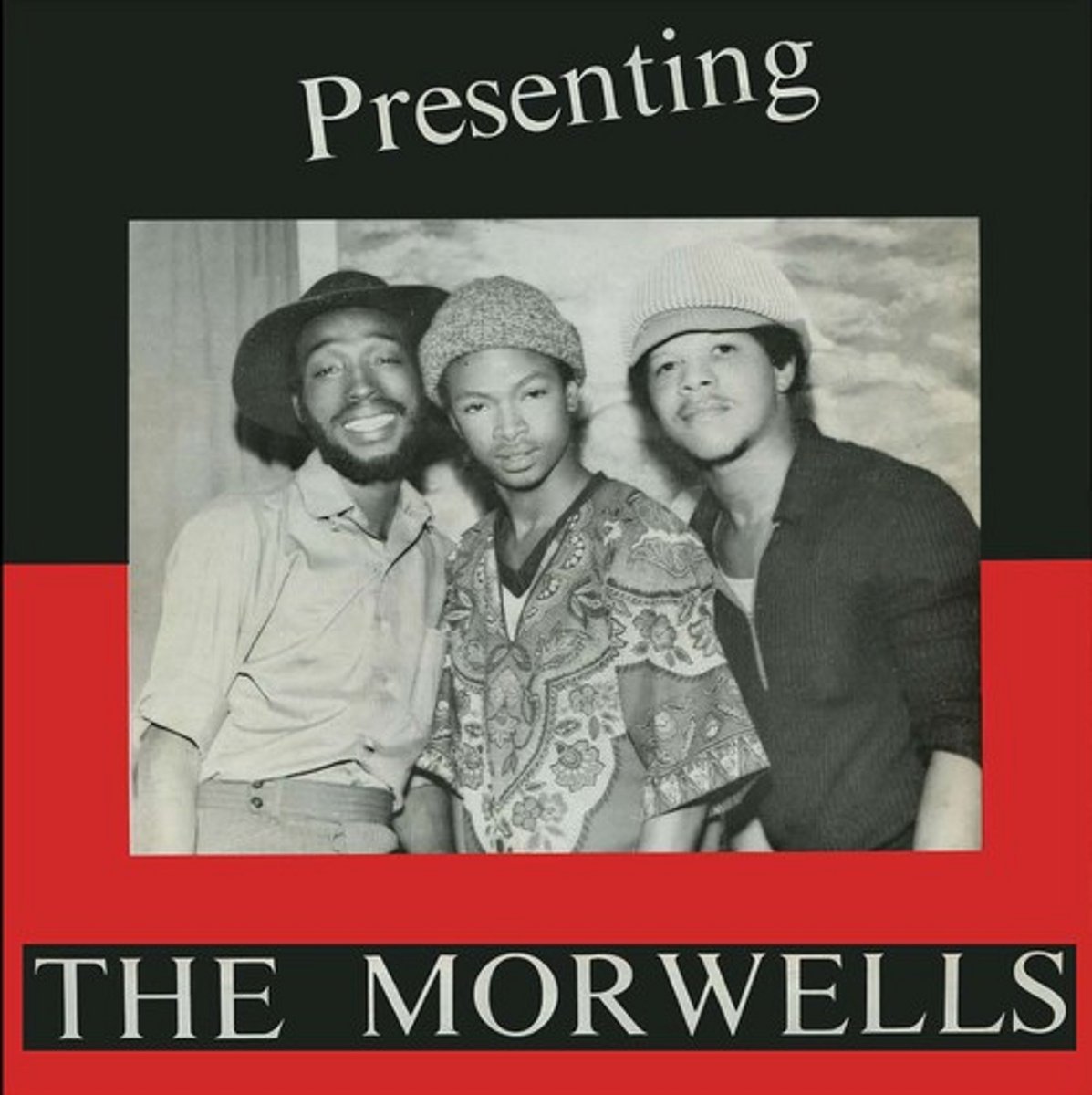
Some reggae albums arrive already surrounded by a legend: a famous producer, a big studio, a hit single, a sleeve everyone knows by sight. Presenting The Morwells has none of those advantages. Its power comes from something quieter and, in the long run, more revealing. This is a 1975 record made by a young Kingston group working through its own Morwell Esquire imprint, recording songs sturdy enough to stand on their own and rhythms strong enough to be rebuilt in dub the same year.
That makes the album an unusually good place to hear roots reggae’s independent current taking shape. The Morwells did not separate singing, playing, producing and issuing records into different worlds. Maurice “Blacka” Wellington and Eric “Bingy Bunny” Lamont came from the same Trenchtown orbit, formed the group in 1973, and began putting their work out under their own name. Louis Davis joined in 1974, bringing arranging experience from the Versatiles. By the time Presenting The Morwells appeared, the group had built a small but serious musical world of its own.[1] [2]
A group that built its own door
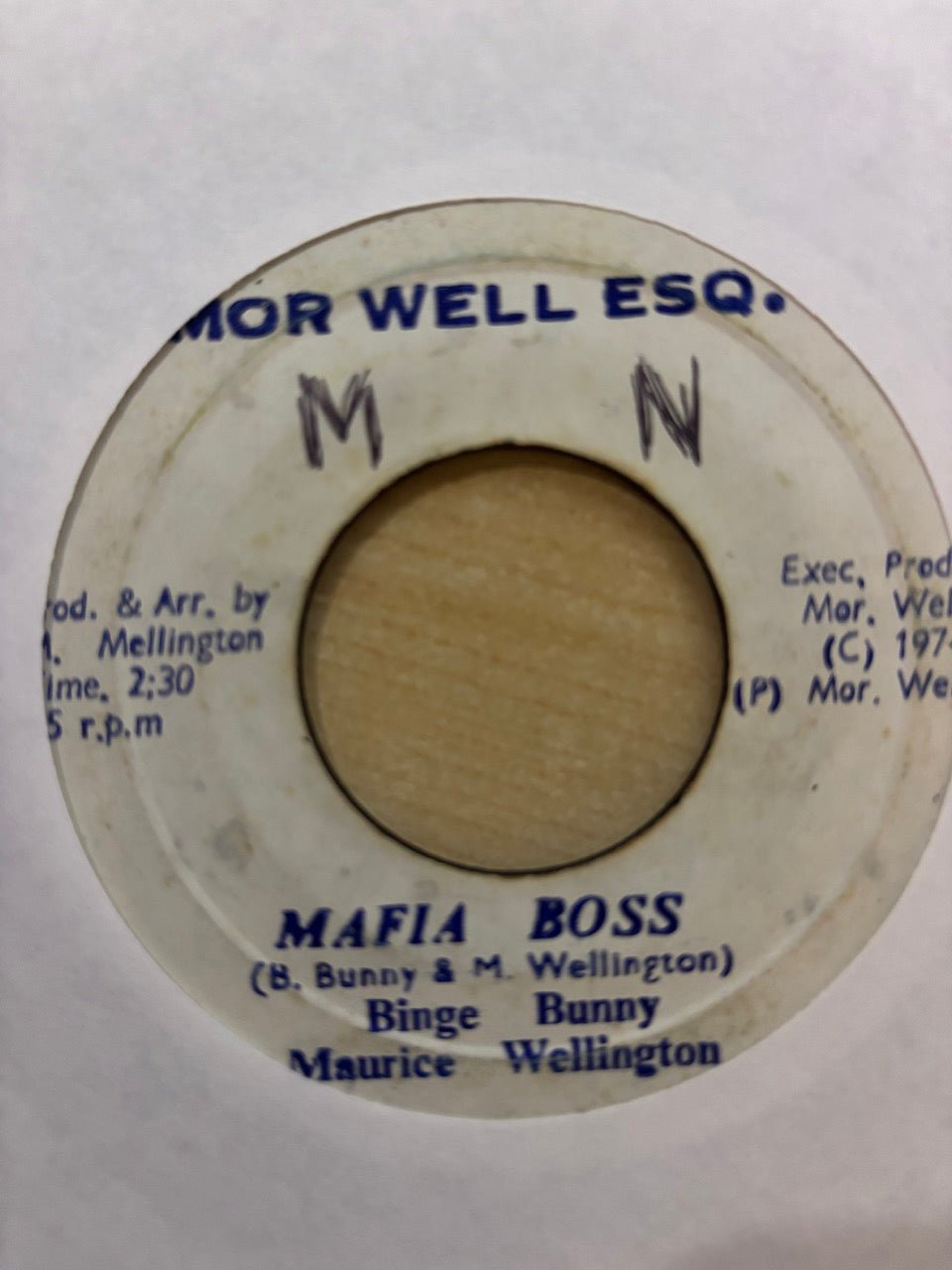
The word “independent” can sound too tidy in retrospect. In mid-1970s Jamaica, a self-run label was not a branding exercise. It was a practical way to get a record from an idea to a pressing, then out into sound-system and shop circulation. Wellington had worked as a record salesman and freelance producer; Lamont had already recorded with Bongo Herman for Derrick Harriott. Together, they had enough experience to understand how music moved through Kingston, but not enough insulation to take that movement for granted.[1] [2]
The group’s name itself comes from Wellington. Lamont and Wellington were childhood friends from Trenchtown’s Ghost Town area, and their partnership carries the feel of people building outward from a shared local language rather than being assembled for a studio project. When Louis Davis joined, the Morwells gained an arranger who had previously worked with the Versatiles and Junior Byles, and who also taught Lamont guitar.[1]
That background gives Presenting The Morwells its particular balance. It is a vocal album, not a document of one singer standing above everyone else. The three voices move through melodies that can sound open and inviting one moment, then turn wary or insistent the next. The music carries the tough patience of roots reggae, but it does not need to announce its seriousness through heaviness alone.
Listen in the archive: hear the complete Roots & Dub Vault upload of Presenting The Morwells.
Presenting The Morwells (1975): song form with a roots pulse
The record moves across ten tracks: “Try,” “Swing And Dine,” “Reality,” “Trench Town Way,” “Come On Little Girl,” “You’ve Got To Be Holy,” “I Don’t Know Why,” “Somewhere To Live,” “Bit By Bit,” and “Educate Your Mind.” A contemporary account describes the LP as a mixture of originals and cover versions associated with artists including the Melodians and Delroy Wilson. The Morwells were not treating Jamaican songbooks as fixed heritage. They were drawing on a living catalogue and making it answer to their own voices, band circle and label.[2] [3]
“Trench Town Way” gives the album its most obvious point of origin, but Presenting The Morwells is not a travelogue. The neighbourhood is not presented as scenery; it is a source of social knowledge. Titles such as “Reality,” “Somewhere To Live,” “Bit By Bit” and “Educate Your Mind” point toward the wider emotional territory of roots reggae: insecurity, persistence, learning, love, faith and the pressure of ordinary survival.
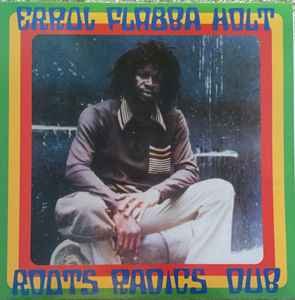
The credited musicians help explain why the record never feels slight. Release documentation names Errol “Flabba” Holt on bass, Eric “Fish” Clarke on drums, Earl “Chinna” Smith and Tony Chin among the guitarists, and keyboard players including Ansel Collins and Theophilus Beckford; Ernest Hoo-Kim is credited as engineer, with Osbourne “King Tubby” Ruddock named in the mixing credits.[3] These are album-specific personnel, not a claim that the LP was made by the later fully established Roots Radics.[1]

The companion record: when a vocal album becomes a dub question
The most important thing to know about Presenting The Morwells may be that it did not end with the final vocal track. In the same year, the group issued its dub counterpart as Morwell Unlimited Meet King Tubby’s Dub Me. Roots Archives describes Dub Me as the King Tubby-mixed companion to Presenting The Morwells.[1]
A dub companion does not imply that the vocal album was incomplete or that the dub is merely an instrumental afterthought. In Jamaican recording practice, a rhythm could be a singer’s foundation, a deejay’s platform, a sound-system special, a version, or the raw material for a new mix. The point was not to decide which version was the only valid one. The point was to find out how many lives the rhythm could support.
For a fuller explanation of how reggae rhythms become dub versions, the Dub Reggae guide follows the way bass, drums, delay, reverb and silence turn an existing recording into a new composition. Dub Me belongs inside that story because it lets listeners hear the Morwells’ songs from another angle: less concerned with carrying every lyric forward, more interested in the pressure and potential inside the rhythm.
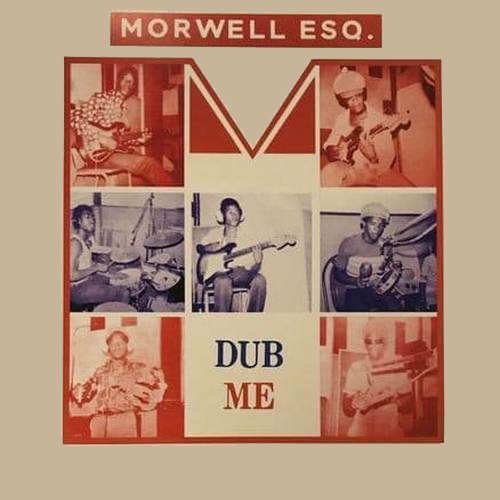
King Tubby’s name signals a particular Jamaican practice: a record can be opened up, stripped back, rebalanced and given fresh movement through the mix. To hear that practice on a later, differently assembled record, follow Augustus Pablo and King Tubby’s later dub world. The point is not that the Morwells and Augustus Pablo made the same record, or worked from the same sessions. It is that the two albums make a wider culture of versioning audible from different directions.
Bingy Bunny, Flabba and the road toward the Roots Radics
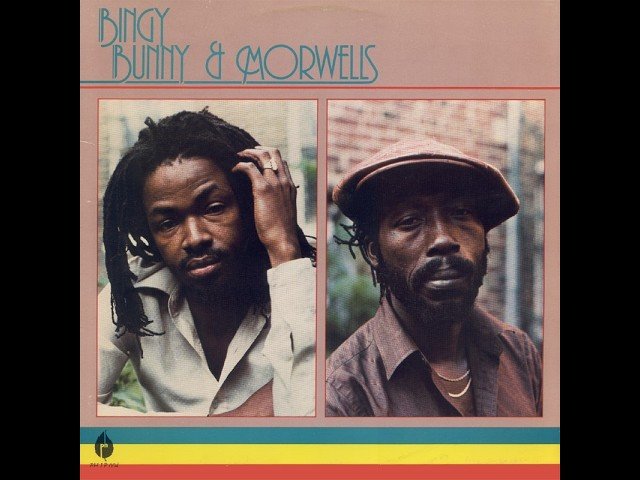
The Morwells’ story is often told backwards from the Roots Radics, and it is easy to see why. Bingy Bunny’s guitar and Flabba Holt’s bass became central to one of reggae’s most durable rhythm sections. But Presenting The Morwells matters precisely because it catches the network before later reputations harden into a familiar roster.
Lamont and Holt went on to form the Roots Radics in 1978, while Wellington concentrated increasingly on engineering, production and the Morwell label. The chronology is not a footnote. It tells us that the Morwells were not simply a preliminary draft of another group; they were a working unit whose experience, relationships and self-reliance helped make later work possible.[1]
Wellington’s move into the Joe Gibbs orbit in 1976 provides one of the clearest links. According to specialist biographies, he worked as a studio engineer and producer for Gibbs, including on early Culture recordings.[1] [2] That makes Culture’s Two Sevens Clash Deep Dive more than a general recommendation: it is a route into the next chapter of the same roots-reggae environment.
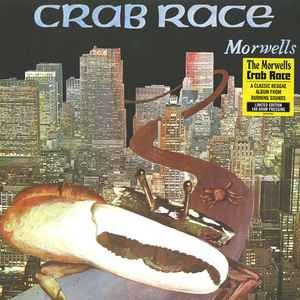
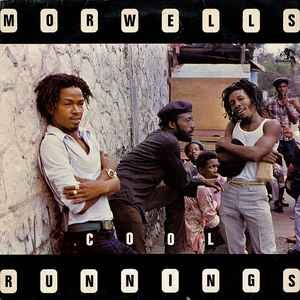
The later Morwells catalogue makes that continuity visible without turning it into a simple career ladder. Crab Race appeared in 1977, followed by Cool Runnings in 1979, while the Morwell name also continued through dub work and subsequent releases.[1] A listener who starts with the debut should not expect each later record to duplicate it. The value lies in hearing how the group’s mixture of harmony, rhythm and studio knowledge travelled across different years and settings.
What to listen for
| Moment | Listen for | Why it matters |
|---|---|---|
| “Try” | The vocal blend settling over the rhythm | The album announces its vocal-group identity through balance rather than display. |
| “Swing And Dine” | A looser melodic pull inside a firm groove | Roots reggae can remain social and graceful without losing weight. |
| “Reality” | The title’s plainness against rhythmic patience | The record’s concern is lived conditions, not abstract pose. |
| “Trench Town Way” | Place carried by vocal and rhythm together | Local experience becomes atmosphere rather than a tourist image. |
| Across Dub Me | How rhythm survives when the vocal lead recedes | The companion album makes Jamaica’s version tradition audible. |
Why this album still deserves a closer listen
Presenting The Morwells is not important because it predicts the future in a neat, linear way. It matters because it proves how much of that future was already being built in small rooms, independent labels and overlapping circles of players. The debut gives us Wellington and Lamont before their later roles became the easiest way to introduce them. It gives us a trio singing through songs that balance tenderness with pressure. It gives us a self-issued vocal record whose rhythms were immediately important enough to be reopened as dub.
That is the real lesson of the Morwells. Jamaican music did not develop only through isolated masterpieces or fixed bands. It developed through people carrying ideas, rhythms and techniques from one session to another. A singer became an engineer. A guitarist became part of a defining rhythm section. A vocal LP became a dub LP. A small label made room for a record that would have been easy to overlook if history only cared about the biggest names.
The Morwells were never asking to be treated as a footnote. Presenting The Morwells makes the case in its own measured way: listen to the voices, listen to the bass, then listen again to what is left when the dub opens the rhythm from the inside.
Explore further
Continue through the Reggae Styles listening map to compare the roots-reggae and dub traditions that meet around this album.
Related Deep Dives
- Augustus Pablo & King Tubby’s King Tubbys Meets Rockers Uptown (1976) — a later view of King Tubby’s mix-led dub language.
- Culture’s Two Sevens Clash (1977) — a route into the Joe Gibbs world where Maurice Wellington’s engineering and production work continued.