Dub reggae is Jamaican music remade in the mixing room. It begins with a recorded reggae rhythm, then transforms it: voices may vanish and return as fragments; the bass and drums move into the foreground; a rimshot can explode into an echo; a guitar chop can disappear beneath reverb; empty space becomes part of the arrangement. A dub mix is not simply an instrumental version and it is not just reggae with extra echo. At its best, it is a new composition built from an existing recording.
The sound emerged from Jamaica’s late-1960s and 1970s recording culture. This is the beginning of dub music history: a distinctly Jamaican dub practice shaped by producers, engineers, musicians and sound-system operators. They treated the version—an alternate cut of a song—as a place for invention. University of Iowa Libraries describes dub as a Jamaican reggae subgenre in which existing recordings are remixed through sound effects and altered vocal tracks, turning the studio itself into an instrument of composition and improvisation.[1] That is the essential idea. Dub makes the mix audible: the choices that are normally hidden behind a finished song become the music.
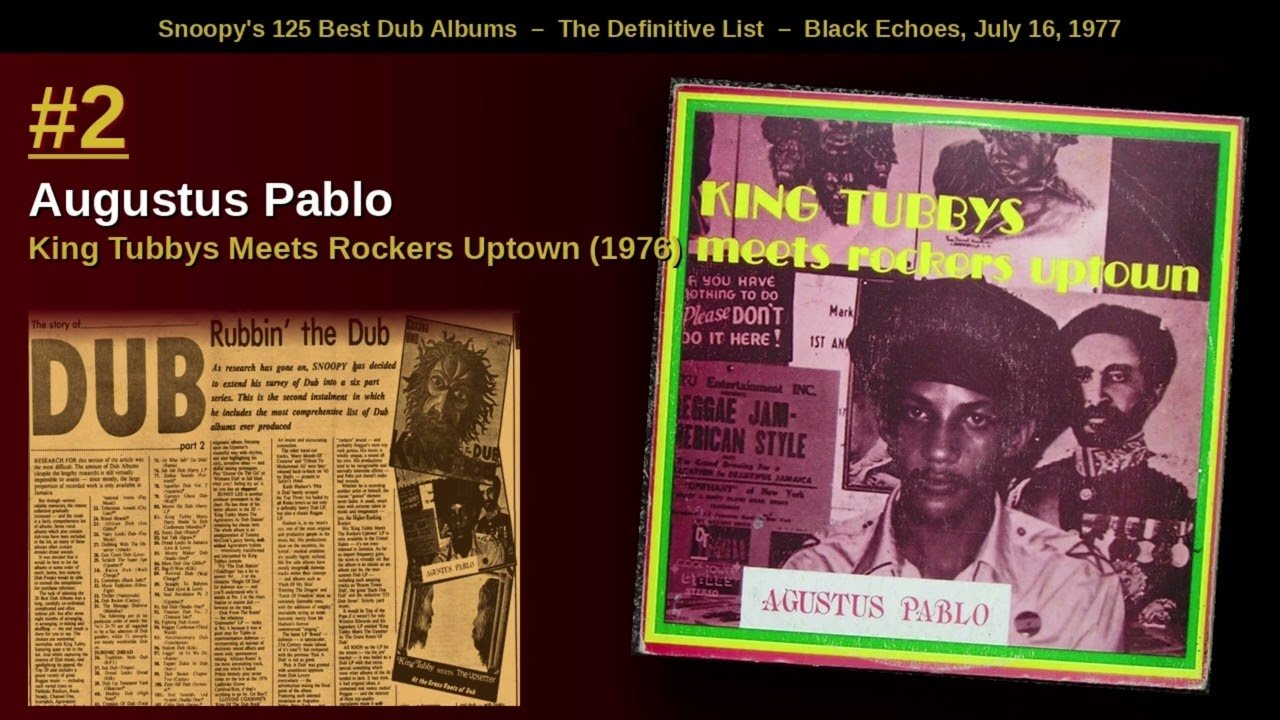
For a first listen, start with Augustus Pablo — King Tubby’s Meets Rockers Uptown (1976). Its melodica, weightless bass, percussion and carefully placed echo make the case in a few minutes. Then come back here and listen for what the mixer is doing to the space around the rhythm.
Dub Reggae at a Glance
Where did dub come from?
Dub emerged in Jamaica from reggae recording, sound-system culture, versions and studio experimentation in the late 1960s and early 1970s.[1]
What does dub reggae sound like?
Listen for deep bass and drums, reduced or fragmentary vocals, sudden drop-outs, delay, reverb, filtering, silence and a constantly shifting sense of emphasis.
Who are the central innovators?
King Tubby is one of dub’s pivotal engineers; Lee “Scratch” Perry, Augustus Pablo, Keith Hudson, Joe Gibbs, Prince Jammy, Scientist and many others expanded the form.
Is dub the same as reggae?
No. Dub grows from reggae, but it reshapes recorded reggae into a mix-led composition. The rhythm remains crucial, while the arrangement is remade.
Why does dub matter?
Dub made the recording studio an expressive instrument and helped establish a model for remixing, sound-system versions and later producer-led music.[1] [2]
Dub Music History: Where Dub Reggae Came From
Dub did not appear from nowhere, and no single person created every part of it. It grew from a Jamaican music economy in which songs travelled through studios, labels, sound systems and dances. A successful rhythm could support a vocal recording, an instrumental cut, a deejay performance and a different version for a different sound. This culture of reuse was not a compromise or a footnote. It was one of the creative engines of Jamaican music.
A version is the key to understanding the change. In its basic form, a version may be a backing track with the lead vocal removed or reduced. That alone opened room for a selector, deejay or audience to experience the rhythm differently. Dub took the possibility further. Instead of presenting the backing track as a neutral accompaniment, engineers and producers began to make the treatment of that track the point: dropping instruments in and out, driving a single snare crack into a long echo, filtering the top end, allowing bass and drum patterns to occupy a larger field, and bringing a few words of a vocal back like a memory.
The University of Iowa guide places dub’s flowering in reggae’s late-1960s-to-early-1980s golden age and identifies King Tubby’s early use of delay and reverb as foundational.[1] Production histories often focus on Tubby because he demonstrated how much drama could be made through the console itself. But it is more accurate to understand him as a central figure within a wider Jamaican community of musicians, producers and engineers. His work met the ideas of performers and producers such as Augustus Pablo, Keith Hudson, Yabby You, Niney the Observer, Lee Perry, Prince Jammy, Philip Smart and Scientist; their records made dub a language with many accents rather than one fixed formula.[2]
In this sense, dub reggae history is also a history of listening. Jamaican audiences already knew the rhythm. The dub version invited them to hear its components afresh: the bass line’s movement, the drummer’s rimshot, a melodica phrase, the breath before a chord returns. The remix did not erase the song’s identity. It revealed the architecture inside it.
King Tubby, Lee Perry and the Studio as an Instrument
Osbourne Ruddock—known as King Tubby—is inseparable from the classic sound of dub. His background in electronics and sound-system work mattered because dub required an engineer who could hear a mixing desk as more than a control panel. In the hands of a master mixer, faders, sends, filters and tape machines become performance tools. Ableton’s production history describes Tubby’s version mixes as revisions of previously recorded vocal songs, and emphasizes the way his later setup enabled individual parts to be routed through reverb and delay, filtered, muted and reintroduced with far greater control.[2]
That description also helps explain why a great dub mix feels alive. It is not merely a list of effects applied after the fact. The timing matters. A vocal line may be removed just before its expected resolution. A high-pitched guitar chop may flash once and disappear. A dry drum hit may be followed by a delayed answer that becomes rhythm in its own right. The mixer is composing tension, release, weight and absence in real time.
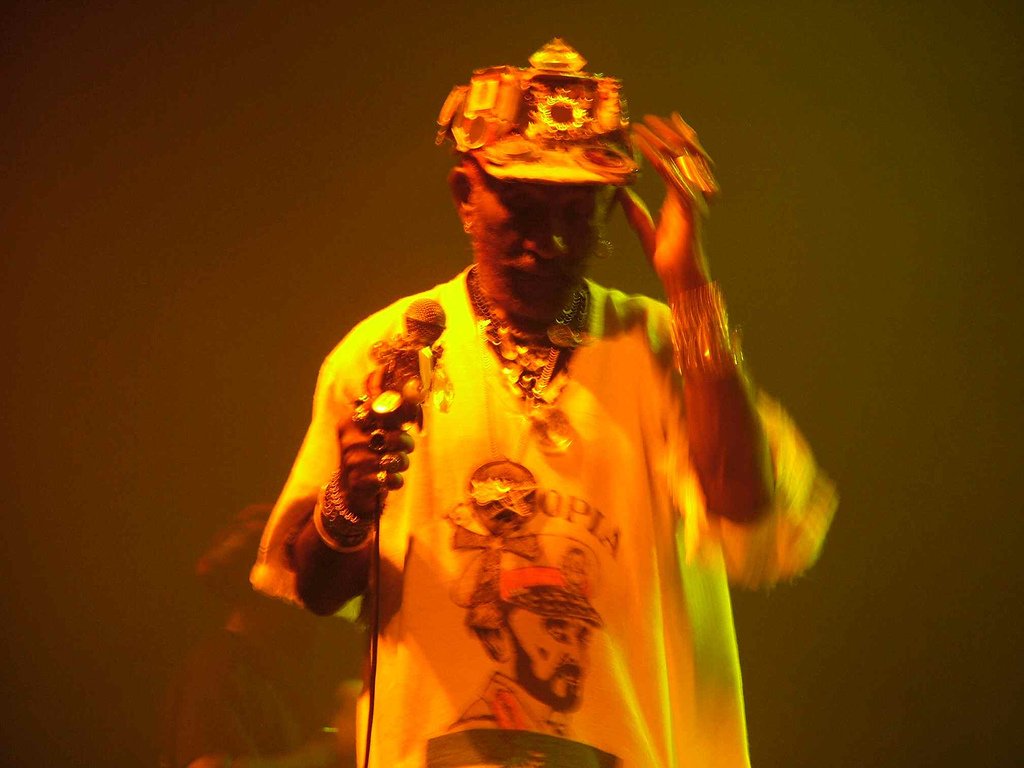
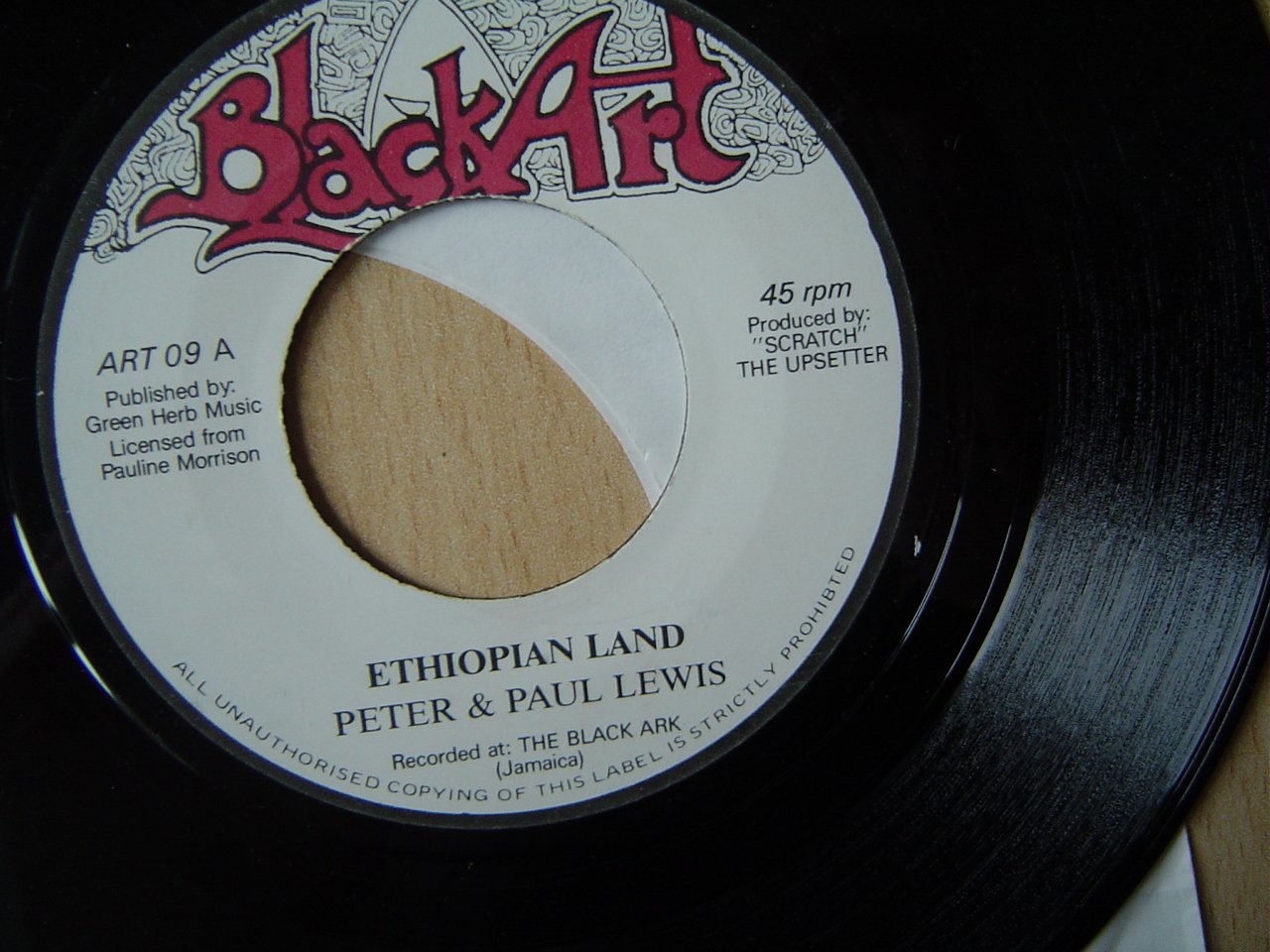
Lee “Scratch” Perry took a different but equally decisive route. His work around the Upsetters and his Black Ark studio showed how a limited room of equipment could become an imaginative world. Perry’s records are often full of texture, strange percussive detail, voices at the edge of intelligibility and effects that feel narrative rather than decorative. Ableton’s account notes Perry’s early-1970s response to dub experiments and the centrality of Black Ark to albums including Super Ape and Blackboard Jungle Dub.[2] The lesson is not that one must choose Tubby or Perry as the inventor. It is that dub opened multiple ways of making a record behave differently from a conventional song.
For a close, archive-specific route into this story, read Augustus Pablo & King Tubby’s King Tubbys Meets Rockers Uptown (1976): The Sound That Made Space Sound Sacred. The Deep Dive follows the melodica, rhythm and dub versions behind a record that remains a remarkably direct introduction to the form.
What Is Dub Music? What Makes It Different?
The most useful answer is simple: dub makes arrangement and sonic space the subject of the music. A reggae song can be powerful because of its lyric, chorus, singer or message. A dub version can preserve parts of those elements, but it asks a different question: what happens when the rhythm section, the room around it and the movement of the mix take the lead?
Classic dub is often recognisable through several characteristics, although no single track needs every one of them.
Bass and drums move into the foreground
The rhythm section carries the emotional weight; the bass line may feel as melodic as a vocal.
Vocal fragments arrive and disappear
A phrase, breath, ad-lib or hook may appear briefly, then be cut away or sent into delay.
Drop-outs create suspense
Instruments are removed to expose the pulse or give an effect room to bloom. In dub, silence is part of the arrangement.
Delay, echo and reverb shape the space
A sound may repeat into the distance, become part of the groove, or acquire a sense of depth and cavernous scale.
Filtering and EQ are expressive decisions
Frequency is shaped deliberately—sometimes thinning a sound, sometimes making it sweep or phase-like.
The mix is performed
The order, duration and force of each entry or removal give a dub mix its individual character.
A detailed production account from Red Bull Music Academy Daily describes early-1970s Jamaican dub through stripped drums and bass, feedback delay and high-pass filtering. It also explains how live mixing made it possible to mute separate instruments and place reverb on selected elements rather than washing out the entire track.[3] These dub music characteristics should never be reduced to “echo.” Effects matter, but their placement and timing matter more.
The silence is especially important. In a conventional arrangement, space can seem like something waiting to be filled. In dub, space is an active element. When the chord disappears and the bass remains, the listener is invited to feel the pulse differently. When a vocal fragment returns after a long delay, it can feel less like a lyric and more like a signal travelling through the mix. This is one reason dub can be both physical and hypnotic: it rewards attention to tiny movements without losing the pull of the rhythm.
Dub vs. Reggae: What Is the Difference?
The phrase dub vs. reggae can be misleading if it suggests two unrelated genres. Dub is rooted in reggae rhythms, musicians, studios and sound-system culture. The terms reggae and dub are often spoken together, but they are not interchangeable: reggae is a broad family of Jamaican music, while dub is a way of reconstructing recorded material—often reggae material—through the mix.
In a reggae song, the vocal and lyric usually guide the listener
The arrangement is built to support the song as performed. Melody, message, singer and chorus may hold the foreground.
In a dub version, the rhythm and the mix lead
The vocal may be removed, fragmented or treated as a rhythmic texture. Fader moves, effects, mutes and returns continually remake the arrangement. Effects are not simply atmosphere: a delayed snare, submerged vocal or filtered guitar can redirect the whole track.
This distinction helps with a common misconception. Dub is not an absence of songcraft. It depends on strong underlying rhythms, memorable fragments and musicians whose playing can withstand being exposed, reduced and rearranged. A weak rhythm will not become profound merely because it has been put through delay. The best Jamaican dub begins with a performance worth returning to, then finds new possibilities inside it.
At the same time, dub’s method reached far beyond one period of roots reggae. It influenced sound-system culture, UK dub and steppers, electronic dub production, post-punk, hip-hop, jungle, drum & bass and countless later forms of remix-based music. It is reasonable to call dub a major ancestor of modern remix practice, provided we remember that the idea was developed in a specific Jamaican cultural and technical context—not invented in the abstract.[1] [2]
How to Listen to Dub Reggae
A first-time listener does not need technical language or expensive equipment. Start with one rhythm and listen for relationships: what stays stable, what disappears, what returns, and what the effect does to your sense of distance.
First, follow the bass. In many dub mixes, it is not simply low-end support; it is the line that holds the track together while the surface changes. Then listen to the drums, particularly the snare, rimshot and hi-hat. A single hit can be dry, delayed, reverberant or suddenly absent. Next, notice how voices behave. A vocal phrase may arrive not to tell a story in full but to puncture the rhythm, trigger an echo or remind you of the original song behind the version.
Finally, listen for the mix’s sense of space. Does the echo sound like a room, a tunnel, a distant speaker stack, an answer from another bar, or something that does not resemble a physical place at all? The answer will vary. That variability is the point. Dub treats sonic space as something a mixer can perform.
For a broad route after this guide, browse dub reggae albums and recordings across the Vault and then explore the Dub Transmissions: Modern & Experimental Dub series. The Vault search offers a wide route into the archive; the playlist shows how dub’s approach continues to change.
Essential Dub Reggae Listening from the Vault
Many listeners use roots dub to describe the heavy, rhythm-led end of this tradition. The aim here is not to declare a final canon. It is to give a listener four clear doors into the archive: one centred on melodica and spatial mixing, one on radical restraint, one on producer-led album construction, and one on the later life of the style.
1. Augustus Pablo — King Tubby’s Meets Rockers Uptown (1976)
This is the ideal first stop because it makes several dimensions of dub immediately audible. Augustus Pablo’s melodica is unmistakable, but it is not left untouched at the front of a conventional arrangement. The rhythm seems to open around it; delay and space give each phrase room to hover. The record also makes clear that dub’s atmosphere is built on an exact relationship between instrumental colour and mix decisions, not on effects alone. Follow it with the Vault’s Deep Dive for a closer account of the rhythms, versions and collaborators behind the album.
2. Keith Hudson — Pick a Dub (1974)
Keith Hudson’s Pick a Dub is a lesson in economy. The record does not need to crowd the mix to sound heavy. It leaves room around the drums and bass, allowing rhythm, texture and small gestures to do the work. Listen to the way apparent emptiness changes the force of the instruments that remain. This is one reason the album is so valuable in a guide to dub reggae: it shows that the form’s power often comes from subtraction rather than accumulation. The companion Deep Dive provides further historical context.
3. Joe Gibbs & The Professionals — African Dub – All Mighty
The African Dub series is useful because it places dub in a producer-led album framework. The Joe Gibbs and Professionals connection reminds us that dub was not confined to one engineer, one studio or one sound. The records demonstrate how a sustained rhythm catalogue can support many alternate treatments, each with its own dynamics and mood. In the Vault, the search also reveals African Dub – All Mighty – Chapter II (1976) and African Dub All-Mighty Chapter 3 (1978), making it possible to hear the series develop rather than treating one famous title as an isolated monument.
4. Lee Perry — Super Ape Inna Jungle (1995)
The Vault result is specifically the 1995 title Super Ape Inna Jungle, not the 1976 Super Ape album. That distinction matters. Use this recording as a route into Perry’s continued exploration of dub’s imaginative, textural possibilities rather than as a substitute for the earlier classic. Then move to the Scratch: The Complete Lee Perry Archive series to hear the broader range of Perry’s work in context.
A Brief Dub Glossary
Version: an alternate treatment of a recording, often based on the same rhythm as a vocal song.
Riddim: the underlying rhythmic and musical framework that can support multiple recordings or versions.
Dubwise: a Jamaican term associated with dub treatment or a dub version; usage varies by context.
Delay: a repeated signal that can create rhythmic echoes, feedback and movement.
Reverb: an effect that gives a sound the impression of resonance, depth or distance.
Drop-out: a deliberate removal of an instrument, voice or other element from the mix.
Sound system: a culture and performance infrastructure built around selectors, deejays, custom sound, records and dances; central to the environment from which versions developed.
What Dub Reggae Leaves Behind
The influence of dub is easy to hear, but it should not be described vaguely. For anyone asking “what is dub music?”, this studio-led approach is the clearest starting point. What later producers inherited was a set of practical and artistic ideas: that a recording can have multiple legitimate forms; that the mixer can perform an arrangement; that effects can organize musical time; that a rhythm can be both a song’s foundation and a canvas for new work; and that a studio can be an instrument rather than merely a place where an instrument is captured. These ideas travelled through Jamaican music and far beyond it, but their starting point remains the creative pressure of Jamaican studios and sound systems.
That is why dub still rewards close listening. Its techniques are familiar now—echo, reverb, filters, looping, remixing—but classic dub makes them feel newly discovered because they are used in service of rhythm, tension and surprise. A fader opens. A snare answers itself. The bass continues. The song becomes something else without losing the pulse that made it possible.
For the deejay-led and digital dancefloor form that developed from the same Jamaican riddim and sound-system logic, continue with the Dancehall music guide.
Explore More in Roots & Dub Vault
Continue by browsing the Vault’s dub recordings, then compare the classic Jamaican approach with Dub Transmissions: Modern & Experimental Dub. For album-specific context, read the Deep Dives on King Tubbys Meets Rockers Uptown and Pick a Dub. Those routes move from the definition of dub reggae to the specific records, players, studios and versions that make the definition meaningful.
Sources and Further Reading
[1] University of Iowa Libraries, “Reggae & Dub”.
[2] Ableton, “A Brief History of The Studio As An Instrument: Part 3”.
[3] Red Bull Music Academy Daily, “The Roots of Dub”.
[4] Michael Veal, Dub: Soundscapes and Shattered Songs in Jamaican Reggae, Wesleyan University Press, 2013.