Part One: A Schoolboy, a Borrowed Melodica, and a Record Shop on Constant Spring Road
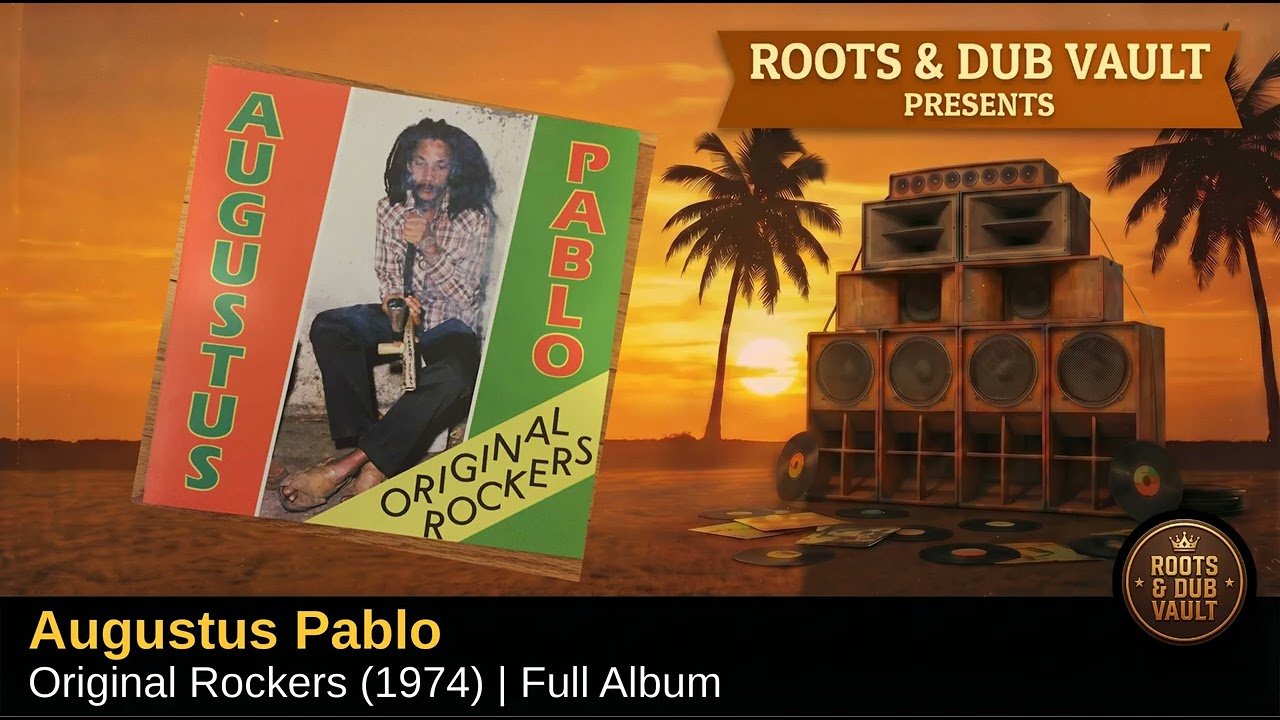
Horace Swaby was born in St. Andrew, Jamaica — most sources agree on 21 June, though the year varies between 1953 and 1954 depending on the source, so this article won’t pretend to more precision than actually exists. He was raised in the comfortable, middle-class district of Havendale, and by his own account music entered the house through his mother’s piano rather than any professional ambition. As a boy he was reportedly resourceful enough about it to build himself a makeshift guitar out of a reel of fishing line when a real one wasn’t available.
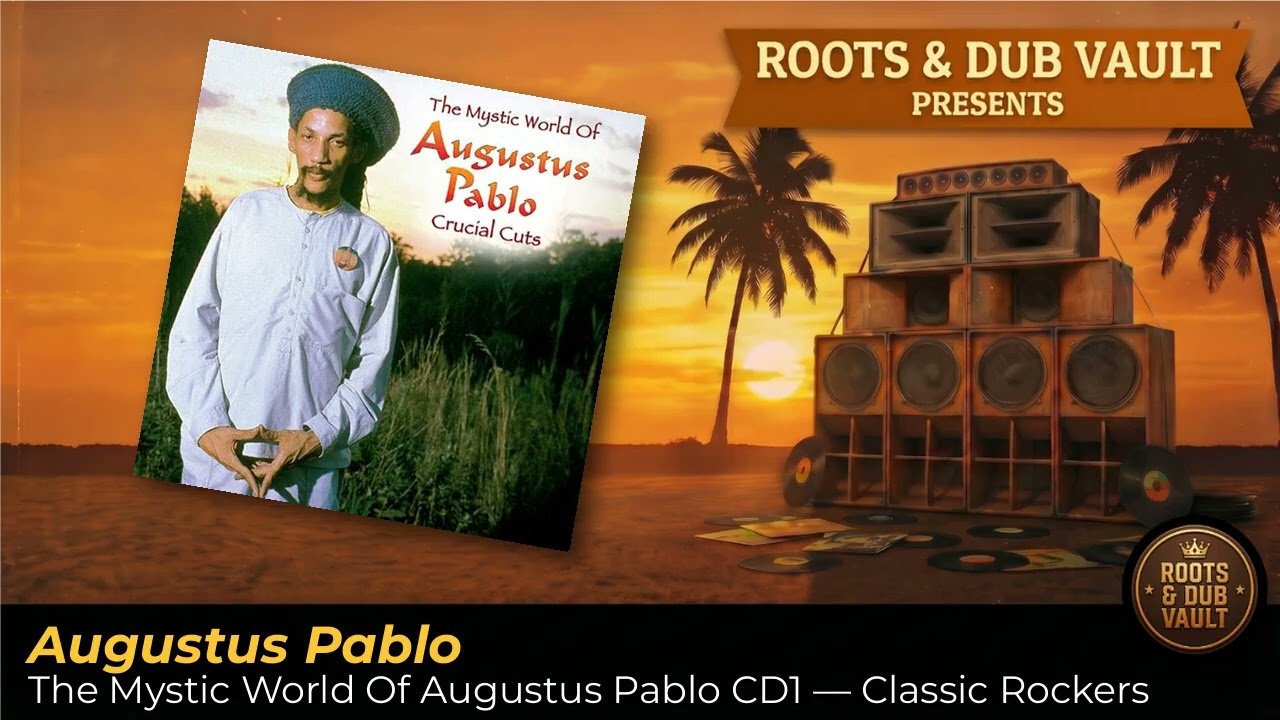
At Kingston College he practised organ in the school chapel alongside a friend named Tyrone Downie — who would go on to become Bob Marley and the Wailers’ keyboard player — the two of them working out Jackie Mittoo licks together and getting teased by classmates for it. But the instrument that actually made Swaby’s name wasn’t the organ. Around 1969, standing in Herman Chin-Loy’s Aquarius record shop on Constant Spring Road, the teenage Swaby was holding a melodica a schoolgirl had lent him — an instrument used at the time almost exclusively to teach music to Jamaican children, never taken seriously by a working musician. Chin-Loy, who already had a reputation for chasing new sounds, asked if he could play it, liked what he heard, and booked studio time within the week.
Chin-Loy had already been using “Augustus Pablo” as a house pseudonym for keyboard instrumentals by other players, including Lloyd Charmers and Glen Adams — a name chosen, the story goes, purely to lend an air of mystery to the releases. Swaby simply took the name for himself and never gave it back. His early sides for Aquarius — “Higgi Higgi,” “East of the River Nile,” “Song of the East,” “The Red Sea” — sketched out what would become known as his “Far East” sound: minor-key melodies, spare melodica lines floating over deep bass and jagged, echo-laced rhythm. At eighteen, working with his school friend Clive Chin at Randy’s Studio 17 on North Parade, Pablo scored his first real hit with the instrumental “Java,” voted Jamaica’s instrumental record of the year.
By the early 1970s Pablo had his own labels — Hot Stuff, Message, and, most enduringly, Rockers. The name wasn’t chosen for effect: it came directly from a small sound system Pablo ran with his brother Garth, who had a particular interest in electronics. The brothers had deliberately built Rockers as an all-Jamaican set at a time when most sound systems still played a fair amount of American soul, favouring homegrown material — especially Studio One’s rocksteady catalogue, which would go on to shape a huge amount of what Pablo built his own career on. Rockers International, the label and later the record shop at 135 Orange Street, both trace back to that sound system’s name, and the Orange Street shop is still standing today, run by Pablo’s children, Addis Pablo and Isis Swaby, decades after his death.

Part Two: The Man at 18 Dromilly Avenue
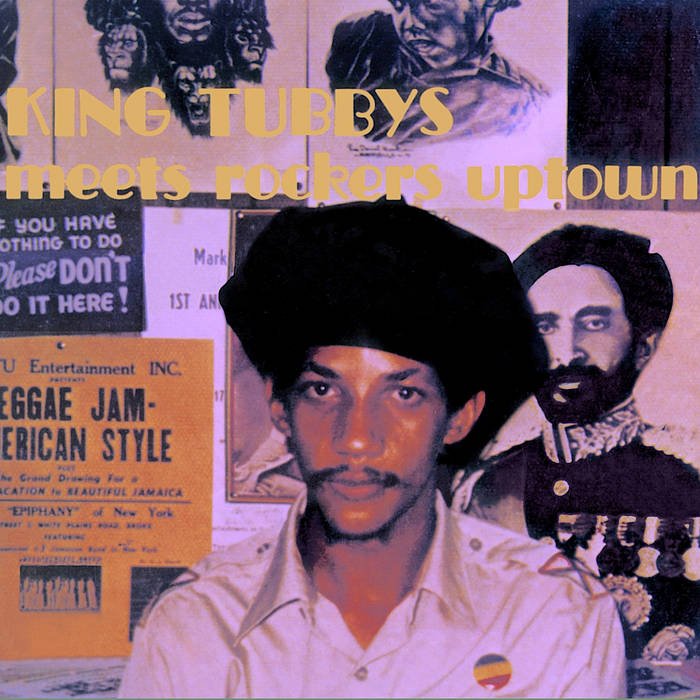
If Pablo supplied the melody, the other name on this album’s cover supplied the physics. Osbourne Ruddock — King Tubby — was born in Kingston on 28 January 1941 and grew up around High Holborn Street before his family moved to the Waterhouse district in the mid-1950s. He wasn’t a musician by training; he was an electronics man. Through the late 1950s he built a reputation repairing radios and amplifiers around the neighbourhood, skill that put him in demand with local sound-system operators chasing louder, cleaner rigs than the competition. By the mid-1960s he was running his own set, Tubby’s Home Town Hi-Fi, and working as a disc-cutter for Duke Reid at Treasure Isle — a job that put him in direct contact with the master tapes of some of the biggest rocksteady records in Jamaica.
It was there, cutting acetates for sound-system play, that Tubby found he could strip a familiar song down to bass and drums, drop the other instruments in and out, and fade the vocal back in only when he chose to — creating something that was recognisably the original record and also something entirely new. That technique, refined through the rest of the decade, became dub—a direct answer to what is dub reggae?.
In 1971 Tubby opened his own studio at 18 Dromilly Avenue in Waterhouse, built initially around a four-track console reportedly bought secondhand from Byron Lee’s Dynamic Sounds. It wasn’t an impressive room by any conventional standard. It became, by most serious accounts of Jamaican music, the single most important studio dub ever had.
Tubby didn’t work alone for long. Through the 1970s his studio trained a generation of engineers who’d go on to define the sound of the next two decades on their own terms — Prince Jammy, who became King Jammy after Tubby’s death, and Hopeton “Scientist” Brown chief among them. To follow King Jammy’s later role in dancehall music, continue with the Dancehall guide’s account of Sleng Teng, reusable riddims and the digital shift. Tubby himself was murdered outside his home at 85 Sherlock Crescent in Duhaney Park on 6 February 1989. The gunman was never identified, and the case remains formally unsolved to this day, generally believed at the time to have been a robbery. He was 48.
The path from Tubby’s version mixes to later digital production is traced in electronic dub.
Part Three: How the Title Track Actually Got Made
The album’s centrepiece, and the reason its title reads like a meeting between two people rather than one artist’s name, is the track “King Tubby Meets Rockers Uptown” — and its actual production history is more specific, and more interesting, than most write-ups let on.
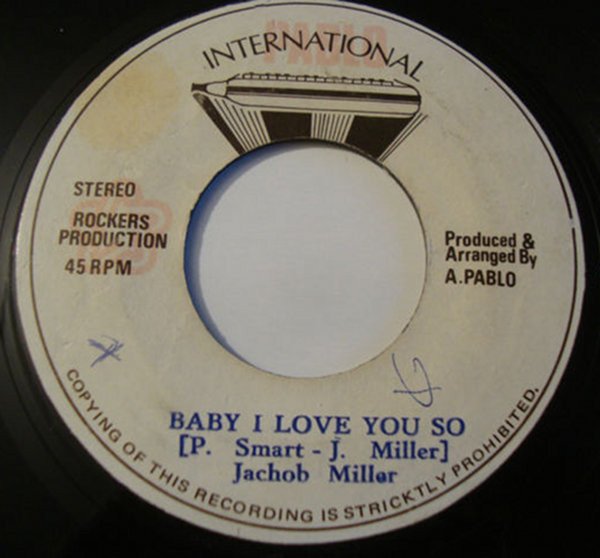
The rhythm underneath it began as a Pablo production for singer Jacob Miller, “Baby I Love You So,” cut at Randy’s Studio 17 on North Parade. According to research collected by specialist reggae blogs drawing on session documentation, the backing was recorded by engineer Errol “ET” Thompson with a serious cast behind it — Aston “Family Man” Barrett and his brother Carlton on bass and drums, Earl “Chinna” Smith on guitar, and a horn section of Richard “Dirty Harry” Hall, Bobby Ellis, and Vin Gordon, with Robbie Shakespeare also on bass on some sessions. Once the backing was down, Pablo took the tapes across town to Tubby’s Dromilly Avenue studio for the mix. That division of labour — tracked at a proper studio, dubbed out at Tubby’s more modest desk — was the standard working method behind a huge amount of 1970s Jamaican dub, and it’s worth naming plainly here rather than letting “King Tubby” imply he personally recorded the band.
The single itself has a genuinely tangled release history, and it’s worth untangling rather than flattening into one date. It first came out in Jamaica in 1974 on the Mango label (Island’s reggae imprint) with “Baby I Love You So” as the credited A-side. Island then reissued it more widely — the US, Canada, UK, and Netherlands — in 1975, and it also appeared as a Jamaican B-side that year under the slightly different title “King Tubby’s Meet Rockers Up-Town.” So both 1974 and 1975 are correct, depending on which specific pressing is being discussed — this isn’t really a contradiction between sources so much as a record that had two different release moments in two different markets, and the album pulled the definitive version together as “King Tubby Meets Rockers Uptown” in 1976.
One more detail worth sitting with: by most available accounts, the single had no chart success anywhere, at any point. It wasn’t a hit. It became one of the most acclaimed pieces of recorded dub in the genre’s history entirely on the strength of what listeners heard once they actually heard it — a useful thing to remember before reaching for words like “landmark” too easily.
Part Four: Twelve Dubs, Compiled Rather Than Recorded
It matters that King Tubbys Meets Rockers Uptown isn’t a album written and cut as one unified session — and the editorial caution here is worth taking seriously rather than treating as a footnote. Between 1972 and 1975, Pablo had been releasing instrumental, deejay, and vocal cuts steadily as 7-inch singles on Hot Stuff, Rockers, and Pablo International. By 1976, with dub albums suddenly in genuine vogue across Jamaica and increasingly abroad, Pablo pulled twelve of his own dub b-sides together into a single, sequenced LP. That’s a different creative act from writing an album start to finish, and it means the personnel, the studio, and even the specific engineer credited can vary from track to track — the In Sheeps Clothing credit list names Family Man Barrett and Robbie Shakespeare, Carlton Barrett, Chinna Smith, Dirty Harry Hall, Vin Gordon, Bobby Ellis, Pablo himself on organ and clarinet, with H. Swaby producing and both King Tubby and Errol Thompson engineering — but that credit list should be read as edition-specific documentation, not as proof that every one of the twelve tracks shares one uniform session.
What’s not in dispute is the effect of putting them together. Heard as a sequence rather than as scattered singles, the record builds something closer to a mood than a playlist: melodica lines drifting in and out over drum and bass that never once feels rushed, echo used less as a special effect than as a kind of architecture. It doesn’t sound like a compilation. It sounds like it was always meant to exist as one continuous listen — which is, in its own way, the most impressive thing about how it was actually made.
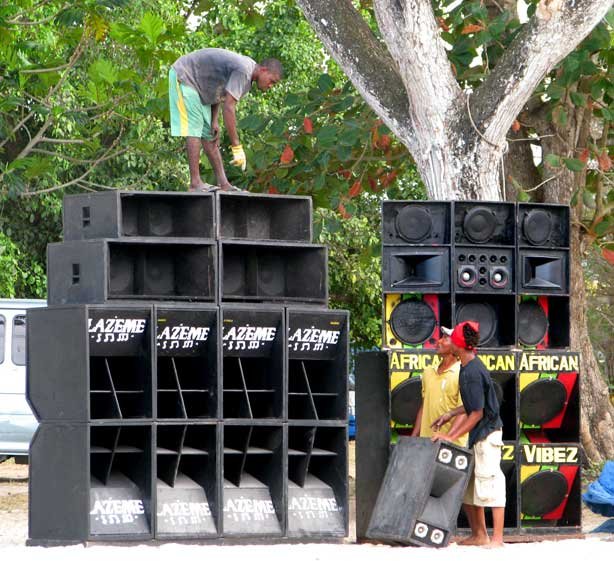
The second CC BY 2.0 dubdem sound-system image, captioned around the sound-system culture that both the singles and the eventual album were built to serve.
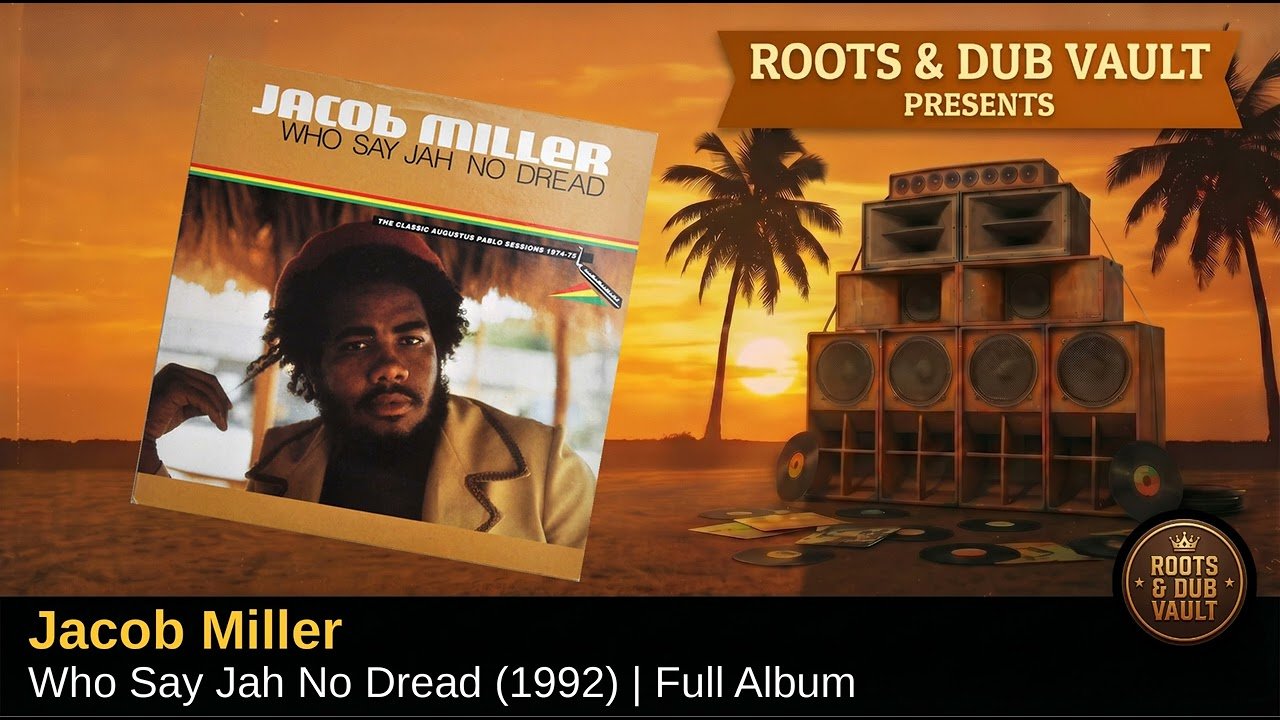
Listen to the complete album: Augustus Pablo & King Tubby — King Tubbys Meets Rockers Uptown (1976) | Roots & Dub Vault
Part Five: A Few of the Doors
Full track-by-track documentation for all twelve cuts isn’t reliably available yet — the research base for this piece flags that as open work, and this article won’t invent lineage for tracks that don’t have one confirmed. But several of the twelve have real, sourced stories worth telling.
“King Tubby Meets Rockers Uptown” is the title track and the record’s best-known moment, built from the Jacob Miller “Baby I Love You So” rhythm described above. It’s been called, without much argument from serious critics, one of the finest examples of dub ever committed to tape.
“Each One Dub” rides another Jacob Miller rhythm from the same period, and critics have long noted it shares the same dark, mystical atmosphere as the title track, even if it doesn’t quite match its emotional charge.
“Frozen Dub” dubs out a Heptones recut of their own Studio One classic “Love Won’t Come Easy” — a nice example of Pablo working the same way Studio One itself had worked for a decade: taking a proven song and letting it live a second life as pure rhythm.
“Satta Dub”, the album’s closing track, dubs out “Satta Massagana” — the Abyssinians’ 1969 Studio One recording that became one of the single most versioned rhythms in the whole history of Jamaican music (the same rhythm, as it happens, that Keith Hudson drew on for “Satta” on Pick a Dub, covered in this series’ second Deep Dive). Ending the album there, on one of reggae’s most foundational and widely shared pieces of musical language, feels like a deliberate closing statement rather than a coincidence of sequencing.
The other eight tracks — “Keep On Dubbing,” “Stop Them Jah,” “Young Generation Dub,” “555 Dub Street,” “Braces Tower Dub,” “Corner Crew Dub,” “Say So Dub,” and “Skanking Dub” — remain genuinely open research questions in terms of their original vocal or instrumental sources. That’s stated here honestly rather than papered over with confident-sounding guesses.
Part Six: Why It’s Still Called the Greatest
The praise around this record isn’t vague enthusiasm — it’s remarkably specific and remarkably consistent across five decades of critics working independently of each other. NME’s 1985 critics’ poll of the greatest albums ever made ranked it 96th, reggae album or otherwise. Colin Larkin’s 1994 book All Time Top 1000 Albums, which pooled votes from musicians, critics, and record buyers, placed it 470th overall and fifth among reggae albums specifically. It made The Rough Guide: Reggae‘s list of 100 essential CDs in 1999, and The Guardian‘s “1000 Albums to Hear Before You Die” in 2007. Treble magazine named it one of the ten essential remix albums of all time in 2022. Most recently, Mojo’s 2024 list of the fifty best reggae albums placed it second overall, behind only one other record.
AllMusic’s own assessment gets at why: the title track is widely regarded as the finest example of dub ever recorded, and the rest of the record — built, as established above, from a stack of singles rather than one session — is, in the reviewer’s judgment, hardly less impressive. That’s a fair summary of what makes this record durable. It doesn’t lean on novelty or shock value the way some early dub experiments did. It leans on atmosphere, restraint, and a genuinely original melodic voice in the melodica itself, and none of that dates the way studio gimmickry tends to.
What to listen for
| Moment | Listen for | Why it matters |
|---|---|---|
| “King Tubby Meets Rockers Uptown” | The melodica floating over a stripped-back, echo-heavy Jacob Miller rhythm | The single that never charted, later called one of dub’s finest achievements. |
| “Each One Dub” | The same dark, mystical mood as the title track on a different Jacob Miller rhythm | Shows the “Far East” sound wasn’t a one-off, but a whole palette. |
| “Frozen Dub” | A Heptones/Studio One classic rebuilt as pure rhythm | Pablo working the same version culture that shaped his own career. |
| “Satta Dub” | The closing dub of “Satta Massagana” | Ends the album on one of reggae’s most shared, most foundational rhythms. |
| Across the whole album | How consistent the mood feels despite being assembled from separate singles | The sequencing does real work — this plays like an album, not a b-sides comp. |
Honest gaps
The recording/mixing split described in Part Three — Errol Thompson tracking at Randy’s, King Tubby mixing at Dromilly Avenue — is well supported by specialist reggae research and matches how dub was generally made in this era, but it comes from enthusiast documentation rather than a single fully authoritative production credit sheet, and it should be read that way.
Eight of the twelve tracks on the album currently have no reliably sourced original vocal or instrumental lineage attached to them in this research. Rather than guess from the titles alone, this article leaves that work open and flags it plainly, both here and in Part Five.
The single’s release date genuinely varies by pressing and territory (1974 Jamaican Mango single, 1975 wider Island reissue) — this isn’t an unresolved contradiction so much as two real, different release events, and the article treats it that way rather than picking one date and hiding the other.
Personnel credits vary somewhat between editions and reissues, which most likely reflects the album’s real history as a compilation of separately recorded singles rather than any single error — edition-specific credit lists should be treated as exactly that, not as a single unified session roster.
No verified free-to-use portrait of either Augustus Pablo or King Tubby has been found for this piece. That’s a real production gap, not an oversight, and it should stay flagged until it’s resolved one way or the other.
Sources
- Rockers International official Bandcamp: https://rockersinternational.bandcamp.com/album/king-tubbys-meets-the-rockers-uptown
- In Sheeps Clothing Hi-Fi album page: https://insheepsclothinghifi.com/album/king-tubbys-meets-rockers-uptown/
- Band on the Wall, “Keeping the Pablo playin’”: https://bandonthewall.org/2018/03/five-track-introduction-to-addis-and-augustus-pablo/
- Discogs, original/reissue release page: https://www.discogs.com/release/253786-Augustus-Pablo-King-Tubbys-Meets-Rockers-Uptown
- Discogs, Jacob Miller/Pablo & Tubby’s 7-inch: https://www.discogs.com/release/862755-Jacob-Miller-Pablo-Tubbys-Baby-I-Love-You-So-King-Tubbys-Meets-Rockers-Uptown
- Riddimguide, “King Tubby Meets The Rockers Uptown” riddim: https://www.riddimguide.com/tunedb/riddim_King%20Tubby%20Meets%20The%20Rockers%20Uptown/
Additional biographical and production detail was cross-checked against Wikipedia’s entries for Augustus Pablo, King Tubby, and King Tubbys Meets Rockers Uptown; AllMusic’s album and single reviews; Trojan Records’ and Reggae Vibes’ Pablo biographies; and The Wire‘s Augustus Pablo discography feature.
Suggested tags: Augustus Pablo, King Tubby, Horace Swaby, Osbourne Ruddock, King Tubbys Meets Rockers Uptown, Rockers International, Randy’s Studio, Errol Thompson, Jacob Miller, melodica, dub, 1976.
Explore further
search for Augustus Pablo and King Tubby in The Vault. Explore the wider archive for the artists, rhythms and dub albums discussed in this article.
Related Deep Dives
- Continue with 4th Street Orchestra — Yuh Learn! (1977) — a later UK-made dub record shaped by Dennis Bovell and sound-system culture.
- Continue with Keith Hudson — Pick a Dub (1974) — another essential study in stripped-back, rhythm-led dub.