The record that sounds Jamaican, but belongs to London
There is a particular kind of record that reveals itself slowly. At first, Yuh Learn! can be heard as a piece of deep, practical roots-and-dub music: bass full in the chest, drums built to carry a dance, horns appearing as sharp flashes rather than decoration, and arrangements that know when to leave room. Its sound speaks the language of Jamaican pre-release culture—exclusive cuts, versions, instrumental pressure, and the expectation that a selector will test the music against a room.
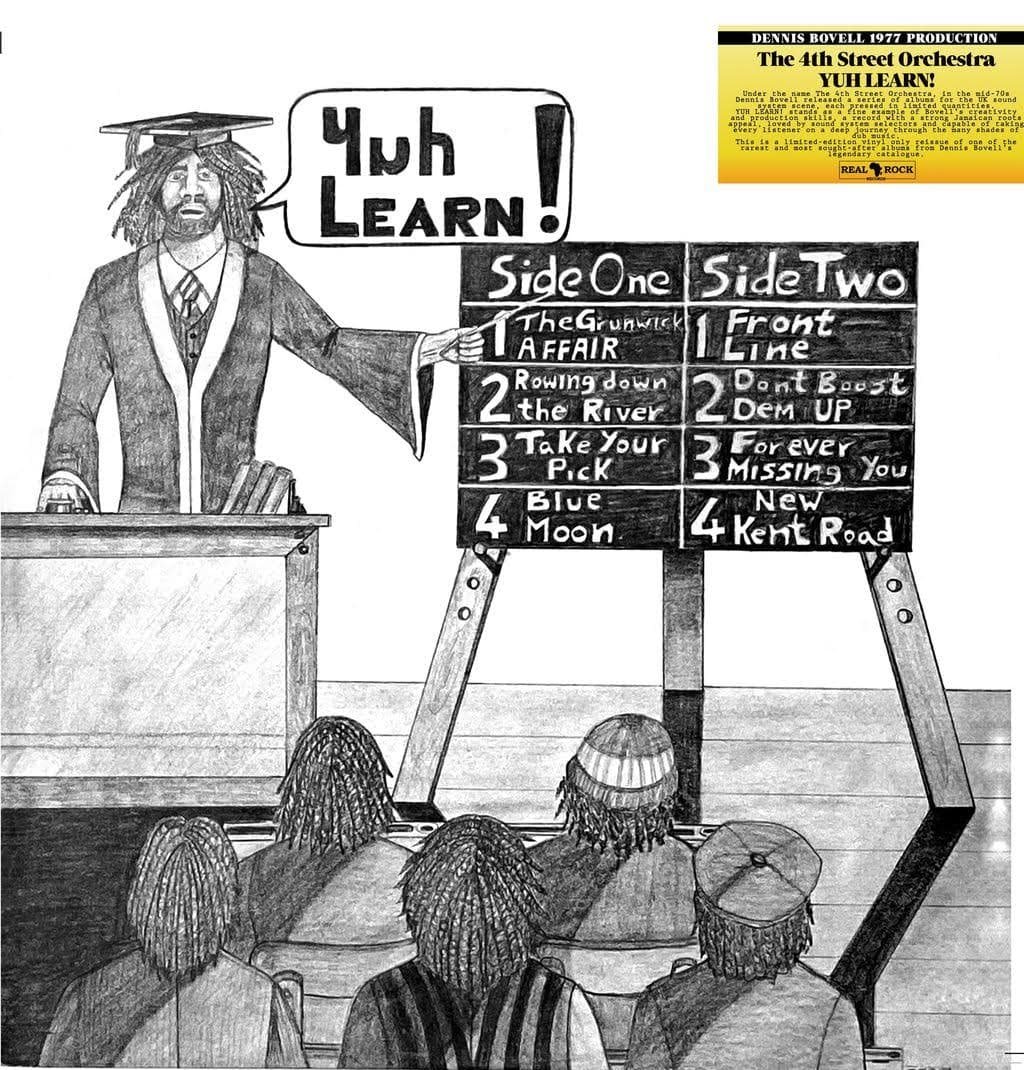
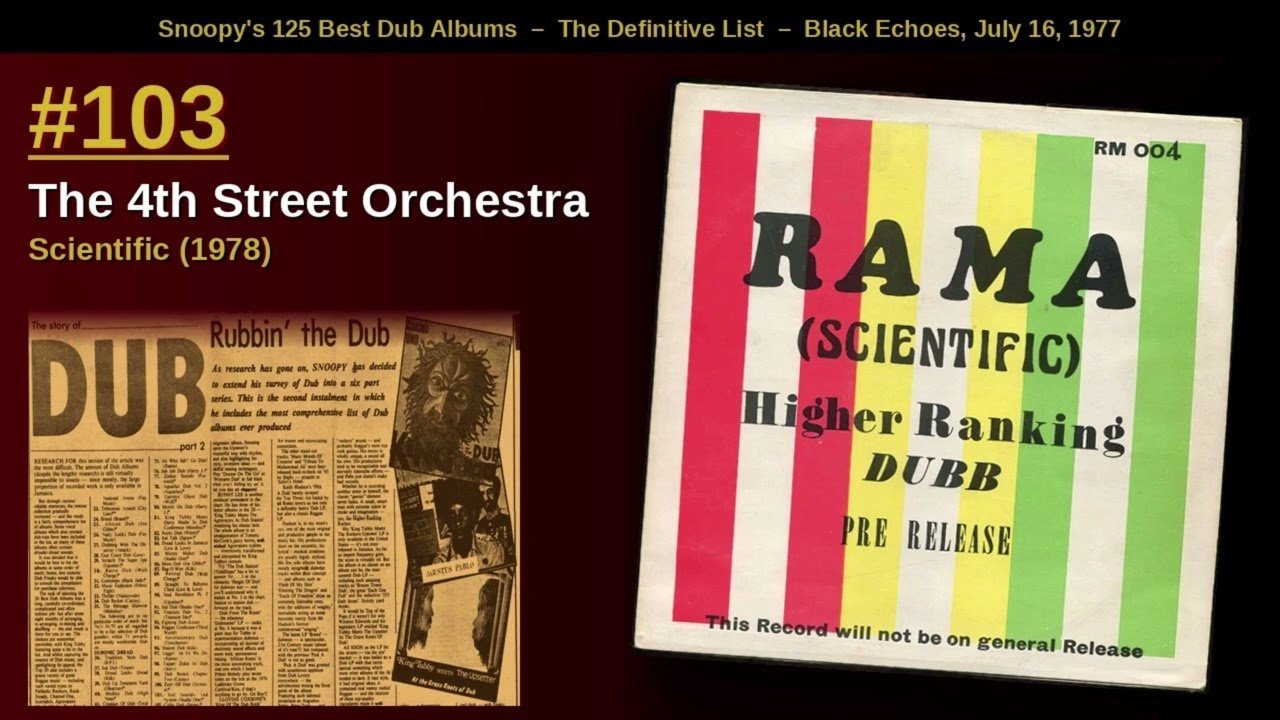
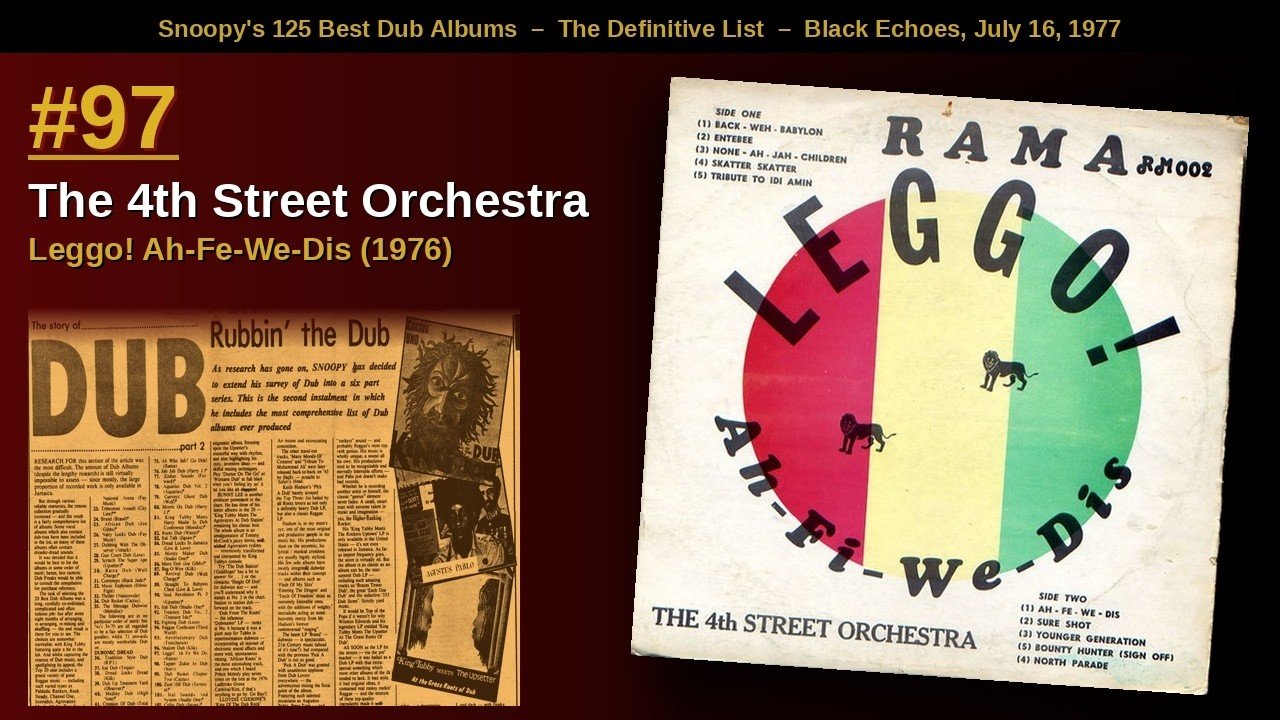
But Yuh Learn! was not made in Kingston. It was made inside the British-Caribbean world that Dennis Bovell was helping to build in the 1970s: a world of London sound systems, independent recording, self-reliant musicianship and records that travelled from hand to hand before they ever reached the official marketplace. Released in the United Kingdom on the Rama label in 1977, the album is credited to the 4th Street Orchestra, one of Bovell’s working aliases.[1] [2]
That fact is not a footnote. It is the central story. The 4th Street Orchestra name allowed Bovell to make an album that could move through sound-system culture as a piece of roots music first and a British production second. It was not an attempt to imitate Jamaica from a distance. It was a way of claiming the same practical right to make pressure, cut versions, name rhythms, and address the moment where he lived.
Dennis Bovell before the legend
By the time Yuh Learn! appeared, Bovell had already learned the most important lesson in sound-system culture: a record is not complete when it leaves the studio. It becomes complete when it meets an audience, a speaker stack, a selector and a competing set of tunes. In a detailed interview, Bovell recalls making dubplates while at school, working with sound systems, and becoming a selector with Sufferer’s Hi Fi during the early 1970s.[3]
This background matters because it explains the physical intelligence in his work. Bovell was never only a musician in the conventional band sense. He was a guitarist, bassist, arranger, engineer, dubplate maker, selector and producer. Those roles all hear music differently. The guitarist may listen for movement; the engineer for separation; the selector for impact; the producer for what a rhythm can become after the vocal has gone. Yuh Learn! carries all of those ears at once.
The record also belongs to the period in which Bovell’s work with Matumbi, his own productions and his sound-system activity were building a distinct British-reggae vocabulary. His later collaborations with Linton Kwesi Johnson would make that vocabulary internationally visible, but the mechanics were already present here: weight without clutter, precision without polish for its own sake, and the conviction that reggae made in Britain could speak in its own accent.

Why the 4th Street Orchestra mattered
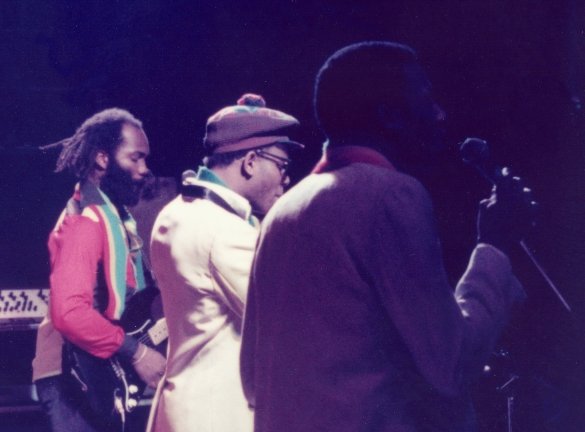
The 4th Street Orchestra was not a conventional fixed group whose meaning can be reduced to a stable list of members. It was a name for a working method: Bovell gathering musicians, ideas and studio resources around a particular kind of sound-system record. Modern reissue notes identify key contributors including drummer Jah Bunny, guitarist John Kpiaye and horn players including Rico Rodriguez, Michael “Bammy” Rose and Eddie “Tan Tan” Thornton.[1] Track-level credit listings from the broader Bovell archive also connect the period to Earl Jones, Julio Finn and other collaborators; where the exact personnel differs by cut, it is wiser to describe the album as a Bovell-led collective than to force a single uniform lineup onto every track.[4]
That looseness was a strength. It meant the project could respond to the needs of a rhythm rather than the expectations of a band photograph. A tune could require a horn line, a vocal interjection, an extended dub space or a sudden reduction to drum and bass. The 4th Street Orchestra identity allowed the music to be treated as sound-system material: functional enough to move bodies, open enough to be remade in the mix.
Real Rock Records, which later reissued the album, describes Bovell’s mid-1970s 4th Street releases as limited-edition records made specifically for the UK sound-system scene.[1] That description clarifies the album’s original social life. These were not records designed to wait politely for a review. They were records designed to circulate, surprise and become useful.
A British pre-release in Jamaican language
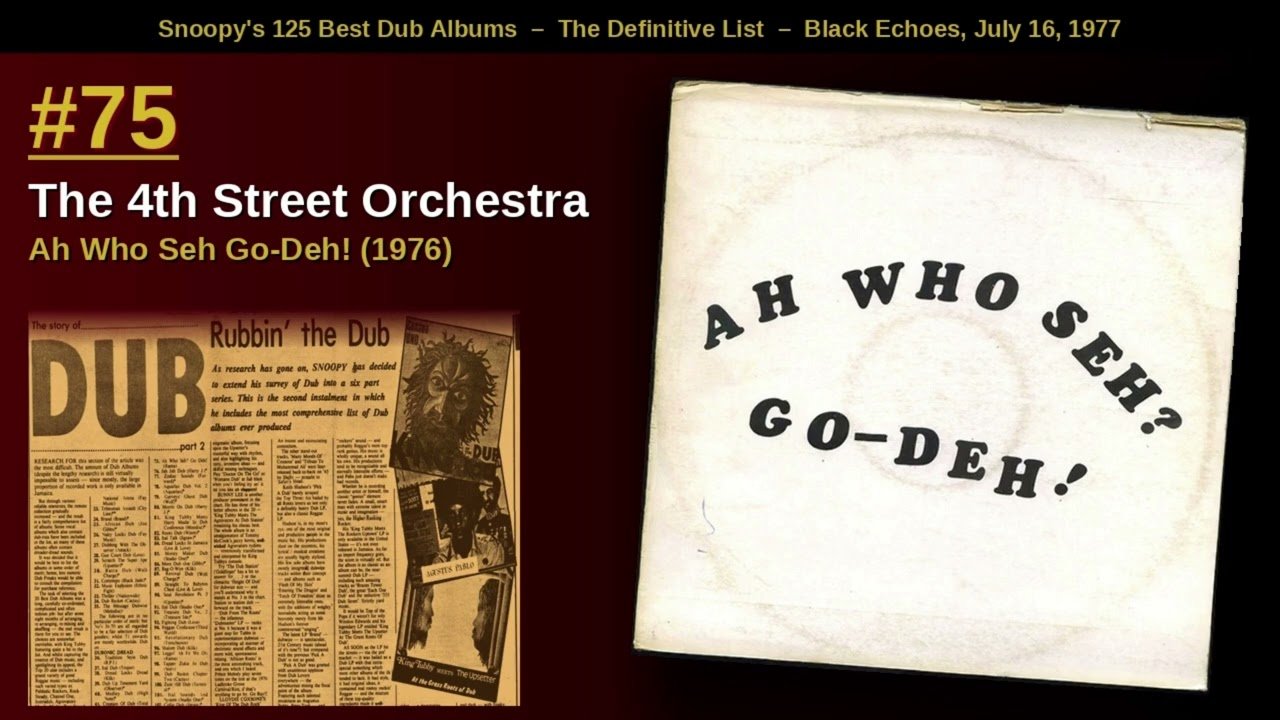
The mythology of the pre-release is essential to reggae history. Before official distribution, a tune might circulate as a dubplate, an acetate or a scarce press, known first by its effect in a dance rather than by its formal catalogue number. That scarcity created suspense. The selector with a tune no one else owned had an advantage; the producer whose rhythm was requested repeatedly had evidence that a record should live beyond one night.
Bovell understood that culture from the inside. The 4th Street Orchestra albums use Jamaican musical grammar—deep rhythm, version logic, self-contained instrumental force—without pretending that London was Kingston. The point was not geographical camouflage. The point was autonomy. The music could meet a Jamaican-rooted audience on terms it already understood while carrying a local British experience inside its titles, rhythm choices and social references.
This is why Yuh Learn! should not be treated as a curiosity in Bovell’s discography. It is an early statement of the principle that would define so much of British reggae: diaspora is not an after-image of the island. It is a place where forms are tested again, and where new social pressures produce new uses for old musical tools.
For the later route from this diaspora sound-system infrastructure into digital, ambient and experimental practice, explore electronic dub.
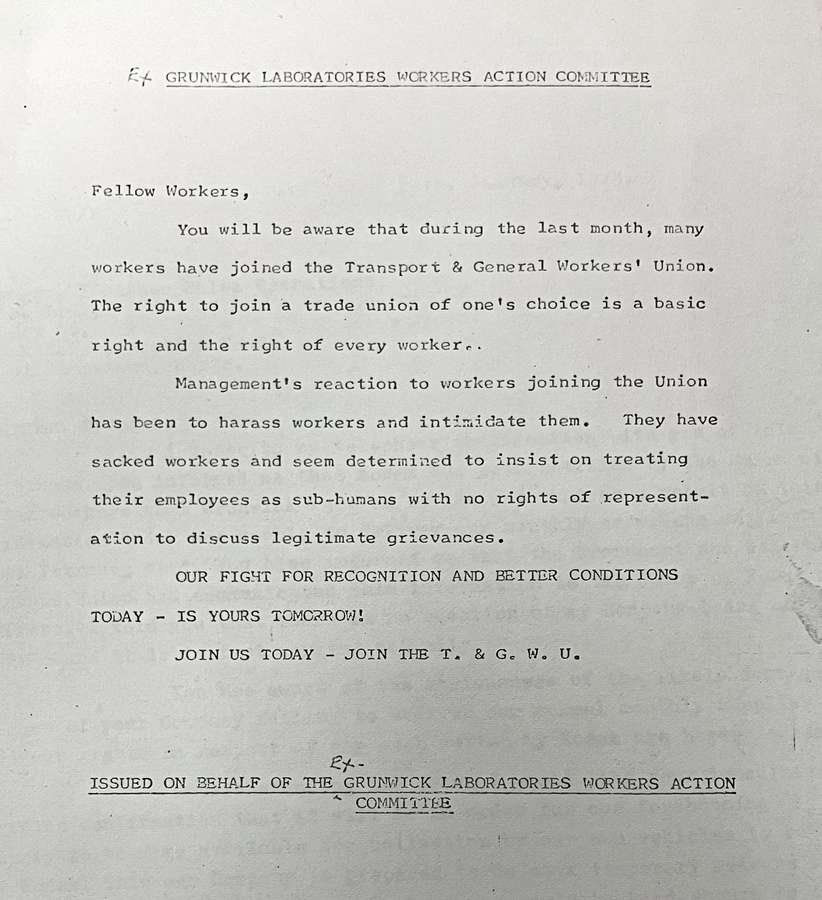
“The Grunwick Affair”: solidarity without a slogan
The album’s most historically charged title is “The Grunwick Affair.” Reissue notes describe it as an instrumental recorded in solidarity with workers at the Grunwick Film Processing Laboratories in Willesden.[1] That should be stated exactly: the piece is linked to the dispute through a stated act of solidarity, not treated as an official anthem or as a record that somehow explains the entire strike.
The actual dispute was larger than any one tune. In August 1976, migrant workers led by Jayaben Desai walked out of the Grunwick laboratory in Brent amid complaints about low pay, long hours, harsh supervision, racism and restricted workers’ rights. The National Archives describes the dispute as a major moment in British trade-union and social-change history, one shaped centrally by South Asian women workers and by the wider politics of migration, race and labour.[5]
The significance of Bovell’s title lies in its refusal to treat that struggle as someone else’s news. Here was a British reggae instrumental placing a local industrial dispute inside the same sonic world as heavyweight dub. The effect is subtle but important. No explanatory voiceover is required. By naming the affair, the record turns a current event into part of the sound-system archive.
The instrumental format also matters. Dub does not explain in the way a speech explains. It establishes pressure, repetition, space and return. A title can point the listener toward a world of events while the rhythm lets that world be felt bodily. In that sense, “The Grunwick Affair” is not simply politics added to a dub album. It is an example of how political time can enter music through naming, circulation and collective listening.

“Rowing Down the River”: when the vocal becomes a launch point
If “The Grunwick Affair” shows the album’s historical intelligence, “Rowing Down the River” shows its operational intelligence. Real Rock’s notes describe the track as a sound-system anthem in which Bovell’s vocal rides the rhythm before a heavyweight dub version takes over.[1] That sequence is a compact lesson in the record’s method.
The vocal does not close the arrangement; it opens it. Once the words have established a line of movement, the dub is free to take the rhythm apart and redistribute its elements. Bass becomes architecture. A drum hit becomes a signal. Horns may appear only long enough to change the light in the room. The version is not a lesser duplicate of the song; it is the point at which the rhythm begins to reveal what else it can do. For the wider Jamaican foundations behind that method, read the dub reggae guide.
This is one reason Yuh Learn! works so well as an album rather than as a set of isolated tracks. Its pieces are connected by an understanding of how a sound system listens. The listener is not asked only to follow a melody. They are asked to notice weight, absence, return and the changing relationship between a voice and a rhythm.
Horns, space and the practical art of the version
The horn credits associated with the album tell us something about Bovell’s imagination. Rico Rodriguez, Bammy Rose and Eddie Thornton were not used to make the record sound respectable in a conventional studio sense. In this kind of music, horns are architectural. A line can announce a section, puncture a bass interval or leave a trace that the echo will carry into a newly opened space.[1]
The same is true of the guitar and drums. John Kpiaye’s importance in British reggae cannot be separated from the way guitar can act as both rhythm and atmosphere. Jah Bunny’s drum role, meanwhile, belongs to the deepest lesson of dub: the groove must be firm enough that the mix can remove almost everything else without the floor disappearing.[1]
What Bovell achieves is not maximalism. Yuh Learn! is rarely busy for the sake of being busy. Its drama comes from decision: when to mute, when to return, when to leave only bass and drum, and when to let a horn phrase or a vocal fragment carry the memory of the preceding section. The album makes a virtue of restraint because restraint gives the low end room to speak.
What the record leaves behind
It is tempting to understand Dennis Bovell’s early dub work only as a prelude to the more widely celebrated records that followed: his work with Linton Kwesi Johnson, the development of lovers rock, the later productions that made his name familiar outside reggae’s specialist circles. That is too linear. Yuh Learn! is not merely an apprentice document.
It captures a particular moment when British reggae could still move through intimate, local circuits: sound systems, independent presses, band networks and dance audiences who understood a version before a critic did. Its rarity is part of that history, but not its only value. The record is compelling because it makes its independence audible. It belongs to London, yet it refuses any suggestion that London reggae was a pale copy of something made elsewhere.
The title now sounds almost instructional. Yuh learn: learn how a rhythm travels; learn how a dub can hold a strike in its name; learn how musicians on one side of the Atlantic build a new home inside forms carried from the other. The album’s lesson is not that British reggae finally became “authentic.” It is that it had always been real where it was made.
What to listen for
| Listening point | Listen for | Why it matters |
|---|---|---|
| “The Grunwick Affair” | Horn phrases, bass weight and the way the title changes the listener’s frame. | The album’s clearest link between UK political life and sound-system dub. |
| “Rowing Down the River” | The transition from vocal movement to dub pressure. | A concise example of Bovell treating the version as the song’s second life. |
| Across the album | How little needs to happen for the mix to feel active. | Bovell’s arrangements rely on selective removal and return rather than constant addition. |
| The horn writing | Short statements rather than continuous melody. | The horns function as architecture inside the mix. |
Listen in The Vault
4th Street Orchestra — Yuh Learn! (1977)
The full album is available in Roots & Dub Vault. Begin with “The Grunwick Affair,” then listen to “Rowing Down the River” without skipping the version movement: the change from voice to dub is the argument in miniature.
Explore further
browse 4th Street Orchestra — Yuh Learn! in The Vault. The full album can be found in the archive with more records from the wider dub continuum.
Related Deep Dives
- Continue with Augustus Pablo & King Tubby — King Tubbys Meets Rockers Uptown — a crucial Jamaican studio counterpart to this dub exploration.