
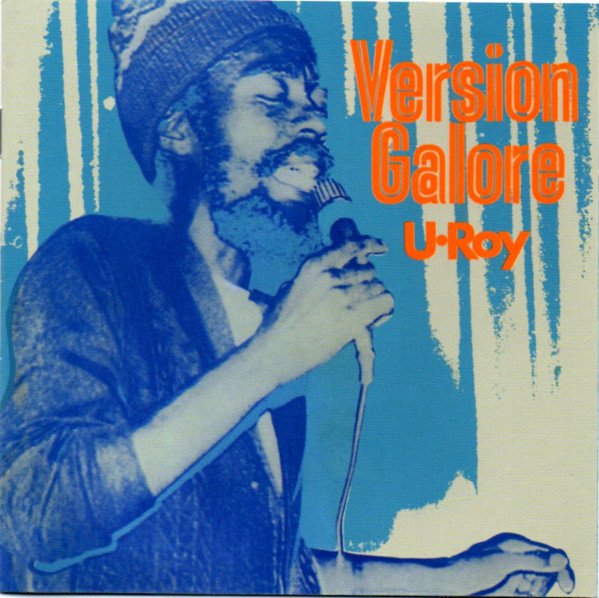
U-Roy — Version Galore is not simply an early reggae album brought back in a larger package. In the Doctor Bird two-CD edition, it becomes a map of a decisive Duke Reid and Treasure Isle period: the original twelve-track Version Galore album on CD1, the later 1974 UK collection U. Roy on CD2, and a run of alternate takes, instrumentals and singles around them. The two Roots & Dub Vault uploads therefore deserve to be heard as a pair, but not confused for one uninterrupted original album.
That distinction is part of the fascination. U-Roy’s voice made old records behave differently. He did not arrive to sing a conventional new song over a new rhythm; he moved inside recordings listeners already knew, conversed with their singers and horns, and made a deejay performance feel like the main event. The result helped turn the Jamaican sound-system deejay from a live dance figure into a recording artist whose name could carry a record. [1] [2]
Listen in the archive: begin with U Roy — Version Galore CD1 (Doctor Bird, 2022), then continue with U Roy — Version Galore CD2 (Doctor Bird, 2022).
What the two uploads actually contain
The 2022 Doctor Bird release is credited as an expanded edition, but its structure is more revealing than that label suggests. Disc one presents the twelve-track Version Galore album and nine additional sides — 21 tracks in total. Disc two presents the twelve-track U. Roy collection with eight further tracks — 20 tracks in total. That is 41 tracks across the set, not a newly sequenced “definitive original” from any single year. Discogs’ own catalogue entry for the release (DBCDD093) files the format plainly as “2 x CD, Compilation,” even though the sleeve markets it as an “Expanded Edition” — which is exactly the gap this Deep Dive is written to keep visible. [3] [4] [5]
| Vault upload | Historical centre | What Doctor Bird adds | How to hear it |
|---|---|---|---|
| CD1 | The 12-track Version Galore, built from U-Roy’s first breakthrough Treasure Isle sides. | Nine related tracks: alternate takes, companion toasts and Treasure Isle instrumentals. | Hear the original album as a concentrated argument for the deejay as a record-maker, then use the bonuses to trace the studio and rhythm library around it. |
| CD2 | The 1974 UK U. Roy collection on the Attack label, assembled mostly from earlier Duke Reid-era material. | Eight related cuts and, crucially, mostly pre-overdub single mixes rather than a simple reproduction of the 1974 LP sound. | Hear it as a later archive of the same partnership, not as a second album recorded after Version Galore. |
Doctor Bird’s own notes describe the set as “the complete Treasure Isle works of a Jamaican legend,” bringing together both LPs, the remaining Treasure Isle singles and rare alternate takes — the catalogue also flags four tracks as new to CD. Discogs describes the package more narrowly as a compilation whose first twelve tracks reproduce Version Galore and whose second disc begins with the twelve tracks of U. Roy. That more precise framing is the one this Deep Dive follows, while giving Doctor Bird’s own language its due. [3] [4] [5]
Before the albums: a deejay built for the dance
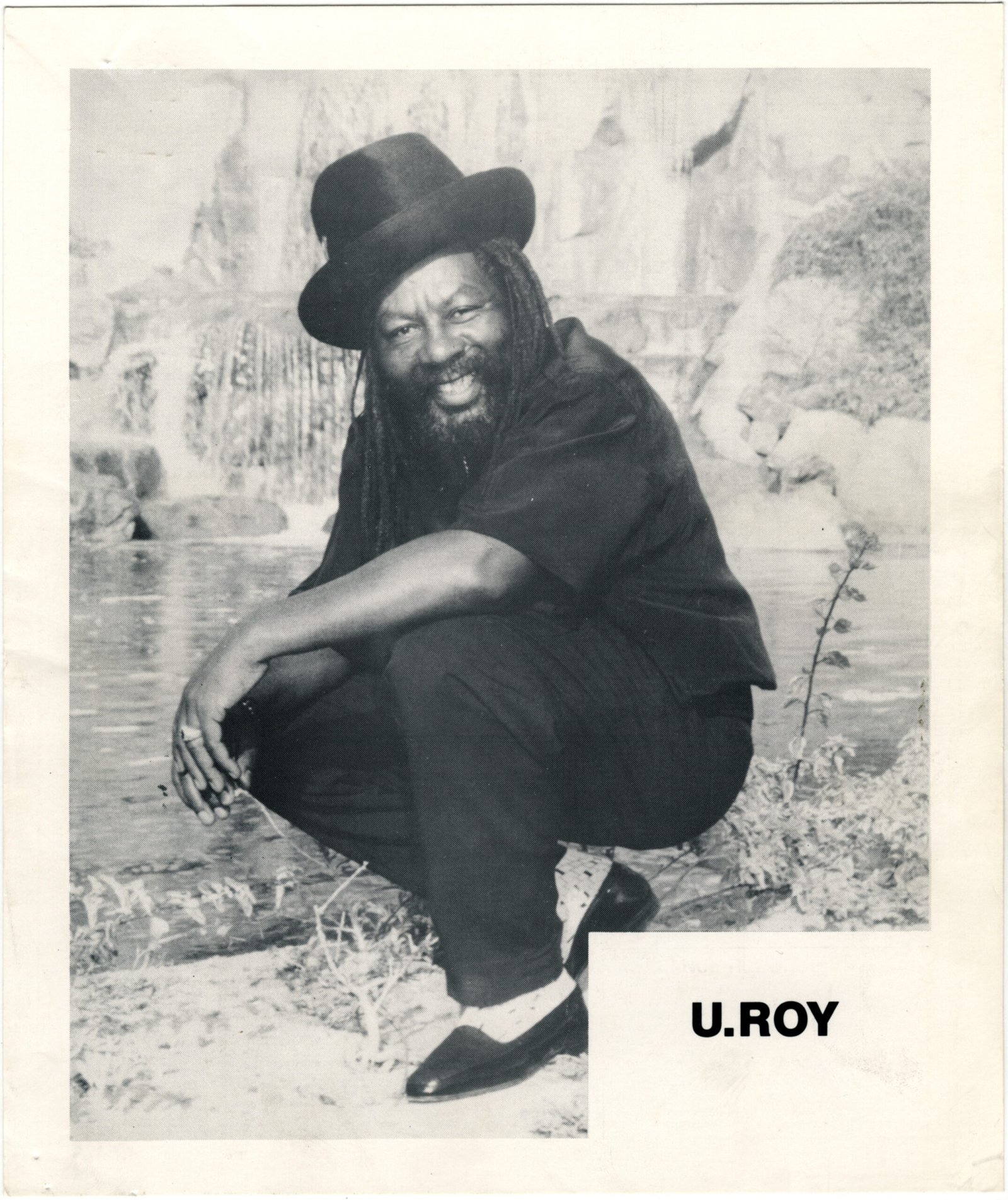
U-Roy was born Ewart Beckford on 21 September 1942 in the Jones Town section of Kingston — a few obituaries round the year to 1941, but the more precisely dated accounts agree on 1942. He left school without finishing and was already deejaying at sound dances by his early teens. [10] [11] [13]
He was an experienced sound-system deejay for most of a decade before Duke Reid put him on record. By his own account, he moved through “Doctor Dickies, Sir George, Sir Coxsone, Sir Percy then coming to King Tubbys” — starting out on Dickie Wong’s set (first billed as Doctor Dickies, later Dickies Dynamic), then Sir George the Atomic, then running the number-two set for Sir Coxsone Dodd’s Downbeat sound while King Stitt held down the main set, then a spell with Sir Percy, before he became the principal deejay on King Tubby’s Hometown Hi-Fi. Count Machuki — who had himself come up on Coxsone’s Downbeat in the 1950s — was the deejay U-Roy most revered: “Count Machuki was the best! The greatest man who ever held a microphone around sound system!” U-Roy was equally direct about not claiming to have started the form himself: “there were deejays before me like Count Machuki, King Stitt and Lord Comic.” His own claim was narrower and, on the evidence, accurate — he was simply the first to get that style pressed onto a record for sale: “in terms of putting music on a record to go out there to the public for sale, I am the first man to do that.” [1] [6]
The route to Treasure Isle joined people, records and machines. In a 2012 interview, U-Roy recalled that Paragons singer John Holt heard him toasting over Duke Reid rhythms at a King Tubby’s dance and went back to Reid to say, in U-Roy’s own retelling, “I hear this youth talking ‘pon one of your riddims man — it sound good.” Reid then reached him through Tubby, and the arrangement that followed was entirely informal: “It was just a verbal agreement.” U-Roy named “This Station Rule the Nation” and “Wake the Town” as the first two sides he cut for Reid. That testimony is more useful than a tidier legend because it locates the studio work inside a specific dance-floor practice: he was already making familiar records move in a new way before the session ever began. [1]
The early response was extraordinary. The Guardian reports that “Wake the Town,” “Rule the Nation” and “Wear You to the Ball” took the top three positions on the Jamaican charts at the same time in 1970, for six weeks. Wikipedia repeats a more specific JBC/RJR formulation, but it is an editable summary rather than independent confirmation, so the account here stays with the Guardian’s sourced claim. [2] [10] [11]

Duke Reid’s rocksteady library becomes a new instrument
The defining idea behind U-Roy Version Galore is versioning. The songs are not empty backing tracks waiting for a voice. They retain their singers, melodies, hooks and emotional shape, while U-Roy talks with them, across them and sometimes into their open spaces. This makes the record quite different from a simple instrumental-overdub or a later dub mix. The deejay becomes an additional character inside a recording that already has a history.
That history is especially rich because Duke Reid’s Treasure Isle catalogue was one of rocksteady’s great rhythm libraries. The Paragons, The Melodians, The Silvertones, Phyllis Dillon, The Jamaicans, Tommy McCook and The Supersonics all remain audibly present in the Version Galore world — AllMusic’s own review counts five of the album’s twelve cuts as direct versions of Paragons sides alone. On “On the Beach,” U-Roy works around The Paragons’ own 1967 recording of the same name; on “Don’t Stay Away,” he addresses the existing Phyllis Dillon vocal rather than replacing it. [3] [4] [7]
For a wider sense of the sound beneath the deejay, the Rocksteady guide follows the vocal groups, arrangements and rhythmic poise that made these records such fertile material. U-Roy’s achievement was to understand that listeners did not need those foundations erased. They needed to hear them re-entered.
The original Version Galore: twelve compact transformations
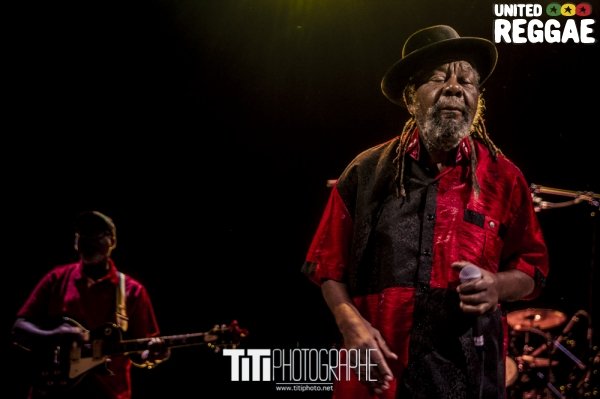
The original 12-track album was compiled from recordings made for Duke Reid at Treasure Isle during 1969 and 1970. Sources differ on exactly when it reached shops: United Reggae’s discography and Wikipedia both place the Jamaican Treasure Isle LP in 1970; The Arts Desk and Cherry Red’s own reissue notes describe the LP as “in the shops” by 1971, which likely reflects the Trojan UK edition rather than the Jamaican original. (AllMusic’s own database listing, for what it’s worth, files the album under 1973. Because that differs from the other cited accounts, it is noted here rather than treated as a rival release history.) Rather than force a false certainty onto that small discrepancy, the safe description is that the recordings belong to the 1969–70 breakthrough, with the album’s Jamaican and UK edition history spanning 1970–71. [3] [4] [7] [8] [10]
Its sequence is strikingly concise. “Your Ace From Space” opens the album with verbal confidence — the title itself borrows a catchphrase from the American radio DJ Jocko, laid over the rhythm of “Broken Hearted Melody,” an unreleased solo tune cut by Delroy Denton, a member of The Silvertones. From there, the album keeps finding new ways to place U-Roy alongside voices already known to the audience. The pleasure is not merely in recognising the source songs. It is in hearing how a deejay can make his way through them without flattening their original character — one reviewer, hearing “True Confession,” wonders aloud how The Silvertones themselves felt about U-Roy talking his way into their 1966 original. [4]
| Moment on CD1 | Existing record in the frame | What U-Roy changes |
|---|---|---|
| “Your Ace From Space” | An unreleased Delroy Denton (Silvertones) solo cut, “Broken Hearted Melody.” | Opens the album by borrowing a catchphrase from US DJ Jocko and planting it on a rhythm the public had never actually heard with its own vocal released. |
| “On the Beach” | The Paragons’ own 1967 single of the same name remains part of the fabric. | He makes the recording feel like a live exchange, inserting motion and commentary without breaking the song’s elegant flow. |
| “True Confession” | The Silvertones’ 1966 original. | U-Roy talks his way directly into an existing vocal trio performance — the kind of insertion that makes reviewers wonder how the original group heard it back. |
| “Wear You to the Ball” | The Paragons’ own single of the same title — one of the pivotal Duke Reid/U-Roy hit records. | The familiar melody anchors an assertive, highly social deejay performance that still feels directed at a dance crowd. |
| “Don’t Stay Away” | Phyllis Dillon’s original vocal stays audible. | The contrast reveals one of the form’s pleasures: the deejay can respond to a singer instead of simply replacing her. |
| “Hot Pop” | Tommy McCook and The Supersonics supply the instrumental drive. | It makes the bandstand feel available to the microphone, showing that U-Roy could make an instrumental rhythm speak too. |
The CD1 bonuses are worth naming in full rather than gestured at, because they are documentary as well as musical — they show how many possible routes sat around a Treasure Isle rhythm before a final single or album track fixed one of them in public memory. The nine additional sides are: “Nehru,” an instrumental by pianist Winston Wright with Tommy McCook & The Supersonics; “True, True” with Ken Parker; “Wake the Town (Take 2)” with The Paragons; “Flashing My Whip,” also with The Paragons; “The Ball,” an instrumental credited to Earl “Wire” Lindo with Tommy McCook & The Supersonics; “Do It Right” with The Three Tops; “Ain’t That Loving You (Alternate Take)” with Alton Ellis; “Do Re Mi” with The Melodians; and “Super Boss,” an instrumental by the Tommy McCook All Stars. [3] [5]
CD2 and the later U. Roy collection
CD2 is where the Doctor Bird framing becomes especially valuable. The later U. Roy LP appeared on the UK Attack label in 1974 — described by one reviewer as U-Roy’s “second album,” though built mostly from earlier Treasure Isle-era material rather than a freshly recorded 1974 session. By that point U-Roy had already moved on to other producers, and no source checked for this piece explains why the Reid partnership itself ended when it did. The one genuinely new element on the 1974 LP was the “Honey Come Forward” / “Merry Go Round” single, also cut that year; “Merry Go Round” rides the rhythm of Errol Dunkley’s “Where I Must Go,” and “Behold” is built on a Supersonics instrumental. The long gap between the two records is exactly why CD2 should be read beside, rather than as a sequel to, Version Galore. [4] [6] [9]

There is a further sound question, and here the Doctor Bird reissue notes are unusually precise. New percussion overdubs had been added to parts of the 1974 U. Roy programme to make older Treasure Isle material sound more contemporary — the practice reportedly began with a 1973 single pressing of “Treasure Isle Skank.” For the 2022 reissue, the original pre-overdub single mixes were tracked down for every cut on the U. Roy side except two: “Treasure Isle Skank” itself, and “Words of Wisdom,” which still carries the added percussion (Tommy McCook & The Supersonics remain audible underneath it regardless). The reissue is therefore neither a pure museum reconstruction nor a literal replay of the 1974 LP — it is a curated attempt to bring listeners closer to the earlier Treasure Isle sound, with two honestly-flagged exceptions. [4] [6]
That decision makes CD2 a rewarding companion to the original Version Galore album. “Honey Come Forward,” “Treasure Isle Skank,” “This Station Rule the Nation,” “Drive Her Home,” “Tom Drunk,” “Words of Wisdom,” “Wake the Town,” “Big Boy and Teacher,” “Everybody Bawling,” “Ain’t That Loving You” and “Behold” round out the twelve-track core, revealing different ways the deejay could handle a rhythm: full toast, dialogue with a singer, comic turn, tough rhythmic declaration or an almost conversational address. The eight further bonus sides extend the same archive: “Way Back Home” (sharing “Behold”‘s rhythm), two versions of The Techniques’ “My Girl” — one an instrumental take without U-Roy at all — two takes of “Peace and Love” with The Jamaicans (a deejay version and the instrumental underneath it), an instrumental “Drive Her Home Part Two,” an alternate “Take 5” of “You Will Never Get Away,” and, most tellingly, unedited studio chatter between U-Roy and Treasure Isle engineer Byron Smith — a glimpse of the session itself rather than a finished side. [3] [5]
Why the Doctor Bird edition needs precise language
Early Jamaican release histories are rarely tidy, and the U-Roy Version Galore story is a good example. The label’s own product notes call the two-CD programme “the complete Treasure Isle works of a Jamaican legend,” while Discogs’ catalogue entry (DBCDD093, released 14 January 2022 with sleeve notes by veteran reissue annotator Tony Rounce) records it plainly as a compilation, and independent reviews identify a mixture of original-album material, later UK compilation tracks, alternate takes, instrumentals and different mix choices. Each description tells part of the truth, but they are not interchangeable. [3] [4] [5] [6]
This article therefore uses “Doctor Bird’s 2022 two-CD edition” for the full package, “the original Version Galore album” for CD1 tracks 1–12, and “the 1974 UK U. Roy collection” for CD2 tracks 1–12. Keeping those names separate makes the record’s history easier to hear. It also avoids treating every bonus cut, or every later mix, as if it had been part of U-Roy’s first LP.
From U-Roy to Big Youth—and beyond
U-Roy’s breakthrough did not make every later deejay sound the same. It made the role viable at album level. By the time of Big Youth’s Screaming Target, a deejay album could be more individual, more overtly roots-conscious and more willing to make a particular voice the record’s centre of gravity. U-Roy’s Duke Reid recordings remain a different proposition: poised, playful and visibly tied to the rocksteady catalogue that preceded them.
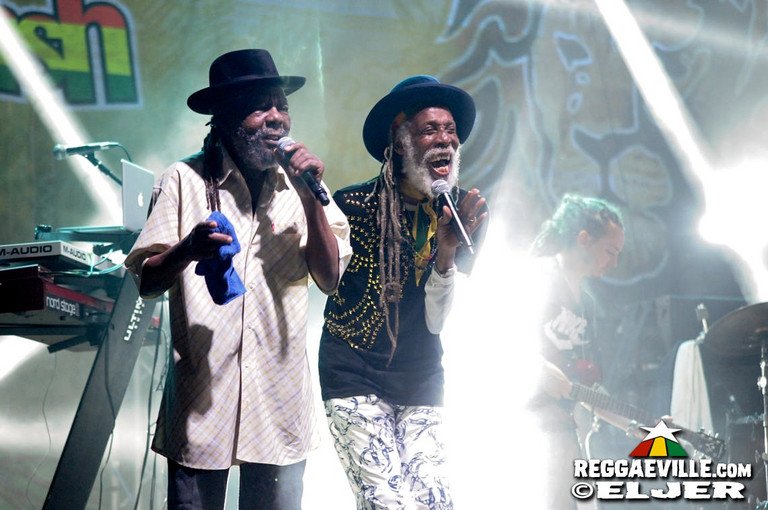
U-Roy’s own career kept moving well past Treasure Isle. In 1975 he signed to Virgin Records for Dread in a Babylon, released across the US, Europe and Jamaica and a significant UK seller in its own right; producer Tony Robinson followed it with a trilogy of albums for the label — Natty Rebel (1976), Rasta Ambassador (1977) and Jah Son of Africa (1978). In 1980, Blondie’s global hit version of “The Tide Is High” sent Virgin back to the Treasure Isle well, re-releasing the Paragons’ 1967 original alongside U-Roy’s own 1971 reading of the same rhythm as a single — the very “Tide Is High” that sits as track five on this reissue’s CD1. Later in the decade he built his own sound system, Stur Gav (named, by his own account, after his sons), which is widely credited with helping launch the recording careers of toasters including Ranking Joe, Charlie Chaplin and Josey Wales. A separate and later honour came in 2019, when dancehall star Shabba Ranks crowned U-Roy “king of deejays” at an anniversary event in New York — a tribute rather than evidence that Stur Gav trained Shabba Ranks directly, and the two claims shouldn’t be collapsed into one. U-Roy died on 17 February 2021, aged 78, following surgery at the University Hospital of the West Indies. [11] [12] [13]
The later Dancehall story would bring harder rhythms, new technologies and a far more deejay-led recording economy. Its foundations are already audible here. U-Roy makes the microphone a lead instrument, but he never hides the older record beneath it. The friction between the inherited rhythm and his present-tense voice is the source of the music’s electricity.
What to listen for across both CDs
- The singer still in the record. U-Roy’s deejay style is most revealing when the source vocal remains audible. Listen for the way he prompts, shadows and interrupts it rather than competes with it.
- The shift from rocksteady to reggae time. The material carries rhythms from a transitional period, so the pace and weight change from cut to cut. The Doctor Bird sequence makes that breadth easier to hear than the original LP alone.
- The difference between a version and a dub. A version here is principally a new vocal intervention into an existing record. It anticipates dub’s reuse of rhythmic material, but it is not the same as a mixer-led reconstruction. The Dub Reggae guide follows the later studio side of that story.
- CD2’s archival character. Hear the second upload as a return to an earlier Duke Reid period from a later release moment. The mix choices — including the two tracks that still carry 1970s-era overdubs — are part of its history, not background detail.
Explore further
Use the Reggae Styles listening map to follow the path from rocksteady foundations through roots reggae, dub and later dancehall. U-Roy’s work makes the continuity audible: a great rhythm does not disappear when a new voice arrives; it becomes available for another kind of authorship.
Related Deep Dives
- Augustus Pablo & King Tubby — King Tubbys Meets Rockers Uptown — a classic dub record that takes the version principle into the mix itself.
- Keith Hudson — Pick a Dub — a different but complementary route through Jamaican version culture, as the studio and mixer move further to the foreground.
Sources and further reading
- United Reggae — Interview: U-Roy
- The Guardian — U-Roy obituary
- Cherry Red / Doctor Bird — U Roy: Version Galore, 2CD Edition
- The Arts Desk — Music Reissues Weekly: U-Roy, Version Galore
- Discogs — U Roy: Version Galore, Doctor Bird 2022 edition
- Louder Than War — U-Roy: Version Galore album review
- AllMusic — U-Roy: Version Galore
- United Reggae — U-Roy: Version Galore discography
- United Reggae — U-Roy: U Roy discography
- Wikipedia — U-Roy
- The Boston Globe — U-Roy obituary
- DancehallMag — Daddy U-Roy, Pioneering Godfather of Jamaican Music, Dead at 78
- WFAE/NPR — U-Roy obituary