Deep Dive No. 2
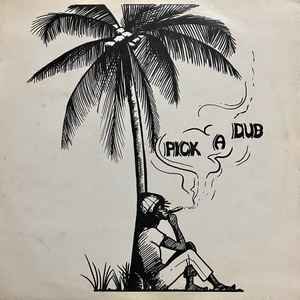
Keith Hudson — Pick a Dub (1974)
Some albums announce themselves with songs. Pick a Dub announces itself with space.
Keith Hudson’s record does not hurry to explain its world. Drums arrive, bass settles into the floor, a guitar phrase flashes and vanishes, a vocal fragment drifts in like it wandered from another room. The impression is not of a band playing in front of the listener, but of a rhythm section being revealed piece by piece. That sense of withheld information — of sound appearing, disappearing, and returning changed — is central to what makes dub reggae different.
It is tempting to call it the first dub album. It is also wrong. Dub had already taken album form in Jamaica by the time Hudson finished this one — Lee Perry’s Blackboard Jungle Dub, cut with King Tubby at the boards in 1973 and pressed in a run of just 300 copies, is often cited as the genre’s first full-length outing, though even that claim carries an asterisk in most serious histories. The more useful claim for Pick a Dub is that Hudson made one of the earliest and most coherent album-length statements in dub: a set of rhythms with its own emotional climate, its own internal logic, and a nearly architectural sense of weight and absence.
The title matters. Hudson did not simply “pick a dub” from an existing catalogue; he showed that a single rhythm could support a whole family of records — a singer’s version, a deejay’s version, a horn player’s version, a melodica player’s version, a sound-system dub plate, an instrumental remix — and that all of them could belong to the same underlying body. Pick a Dub makes that body audible.
Listen to the complete Roots & Dub Vault upload
Part One: Keith Hudson Was Already Thinking in Versions
Hudson was born in Kingston on 18 March 1946 and, by several accounts, grew up in the same orbit as Bob Marley, Delroy Wilson, and Ken Boothe — schoolmates at Boys Town who would all end up shaping Jamaican music from different angles. Music paid for itself in Hudson’s world before it paid anything back: he trained and worked as a dental technician, and it was denture money, not label advances, that financed his first releases on his own Inbidimts imprint. The nickname that followed him for the rest of his career — “the Dark Prince of Reggae” — came later, once the records started arriving.
The breakthrough was Ken Boothe’s “Old Fashioned Way,” a Hudson production that became a Jamaican hit in 1969 and put him on the map as a producer rather than a hopeful outsider. From there the pace never really slowed. Hudson worked through Delroy Wilson, John Holt, and Alton Ellis, and — this is the part of his story that matters most for Pick a Dub — he was one of the first producers in Jamaica to take deejaying seriously as a recorded art form rather than a novelty. In 1969 he brought Ewart “U-Roy” Beckford, then deejaying for Dickie Wong’s sound system, into the studio to cut “Dynamic Fashion Way” over the “Old Fashioned Way” rhythm with the bassline altered underneath him — one of the very first deejay records ever pressed. The same year he tracked down Dennis Alcapone, the voice behind the El Paso sound system, and talked him into making his first record too, at a moment when “talking on a record” still needed to be explained to most people in the business, Alcapone included.
That instinct reached its loudest expression in 1972, when Hudson brought Big Youth, engineer Ossie Hibbert, and — reportedly — an actual motorcycle into Dynamic Sounds studio to cut a rhythm Hudson had originally sung himself as “We Will Make It Up.” The motorcycle wasn’t decoration; its engine noise went onto the tape. The resulting record, released as “S.90 Skank” (also known as “Ace 90 Skank”) on Hudson’s own Mafia label, sat at the top of the Jamaican charts for four months. It’s one of the most important early deejay hits on record, and it’s also the rhythm that would eventually become the title track of Pick a Dub — proof that Hudson had been living inside the “one rhythm, many lives” idea for years before he built an entire album around it. For the later form in which this deejay-and-riddim method became a dominant Jamaican popular sound, continue with the Dancehall music guide.
That album-mindedness wasn’t a late development either. Before Pick a Dub, Hudson had already released three self-contained, deliberately thematic LPs — Furnace in 1972, Strength to Strength in 1973 (later reissued in the UK, retitled Entering the Dragon), and Class and Subject not long after. All three were pressed in tiny quantities, sold poorly at the time, and are now serious collector’s items. None of them made Hudson rich.
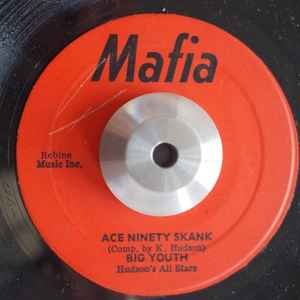
Image source: Discogs release r6749112; label artwork rights remain with the relevant rights holders.
Part Two: A Record With More Than One Birth Date
The Roots & Dub Vault entry for Pick a Dub follows the specialist discography and uses 1974 as the release year, and that’s the date this article uses throughout. But the record’s pressing history is genuinely tangled, and it’s worth laying out honestly rather than smoothing over.
United Reggae’s discography lists a first Jamaican Mamba pressing in 1974, reportedly issued without a cover, followed that same year by a UK Mamba release. From there the album was picked up by Brent Clarke’s UK-based Atra label in 1975 — using the same cover illustration as the Mamba pressing, but now printed in colour, and benefiting from Virgin Records’ distribution muscle to reach a much wider audience than the original run ever could. Later editions followed on Rockers Universite (1979) and Jah Live (1981), before Blood & Fire brought the album back into print in 1994.
A note on the date
Here’s where the story gets genuinely uncertain, and it’s worth being upfront about it rather than picking a date and moving on as if the matter were settled.
Noel Hawks’ liner notes for the Hudson estate — arguably the single most authoritative account of this record’s history, drawing on interviews with Dennis Alcapone, Ossie Hibbert, and Hudson’s own family — state plainly that Pick a Dub “was originally released in 1975.” That’s not a stray typo either: the same essay places the album after two other dated Hudson releases. Flesh of My Skin, his London-recorded solo debut, came out on Mamba in November 1974. Torch of Freedom followed on Mamba in June 1975. Only then, in the estate’s own telling, does Pick a Dub arrive — which would put it in the second half of 1975, not 1974 at all.
Set against that is a fairly strong consensus running the other way. United Reggae’s discography, Wikipedia, and the reissue labels that have handled the album since (VP Records, Soul Jazz Records, Reggae Vibes) all catalogue it as 1974. That’s also the date under which the Vault’s existing upload has always run.
Two credible, closely connected sources disagree by roughly a year, and neither is obviously wrong. This article keeps 1974 as the working date because that’s the discography consensus and the Vault’s own established title — but the estate’s own liner notes deserve to be heard on this, not quietly overruled.
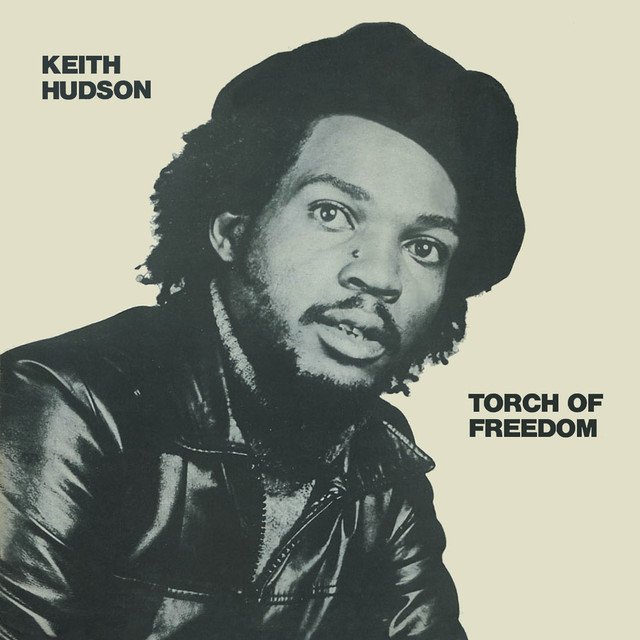
Image source: Discogs release listing; artwork rights remain with the relevant rights holders.
Part Three: Harry J, Heavy Players, and the Discipline of Space
United Reggae credits Hudson as producer and names Harry J as the recording and mixing location — and the studio itself is worth a moment’s attention, because it wasn’t just any room. Harry “Harry J” Johnson opened his sixteen-track studio at 10 Roosevelt Avenue in uptown Kingston in 1972, funded in part by Chris Blackwell, and it quickly became one of the island’s most in-demand rooms. This is the studio behind “The Liquidator,” the Marcia Griffiths and Bob Andy duets that cracked the UK charts, and — across the following few years — Bob Marley & the Wailers’ Island-era run, including Catch a Fire, Burnin’, Natty Dread, and Rastaman Vibration.
The engineer behind the board for Pick a Dub was Sylvan Morris, and his presence alone tells you something about how seriously this session was taken. Morris cut his teeth at WIRL in the mid-1960s, spent time at Duke Reid’s Treasure Isle, and then ran the desk at Coxsone Dodd’s Studio One for roughly six years — Bunny Lee later credited him as the real backbone of that studio’s sound, and as one of the engineers a young Errol Thompson learned from. By the time Morris moved over to Harry J full-time around 1974, he brought a pedigree with him that few Jamaican engineers of the era could match. He would go on to engineer Natty Dread.
The musicians the estate’s notes credit for the session split into two distinct camps, and it’s worth naming them properly rather than folding everyone into one vague “backing band.” On some tracks it’s the classic Wailers rhythm section — Carlton “Carlie” Barrett on drums, Aston “Family Man” Barrett on bass — with Augustus Pablo’s melodica threaded through the top. On others it’s Soul Syndicate, the Greenwich Farm session band who’d started out as the Rhythm Raiders and, under the name the Aggrovators, also did double duty as Bunny Lee’s house band: Carlton “Santa” Davis on drums, George “Fully” Fullwood on bass, Tony Chin on rhythm guitar, Tony Chin and Earl “Chinna” Smith trading off lead, and keyboards split between Fullwood, Bernard “Touter” Harvey, and Keith Sterling. Two of Kingston’s best rhythm sections, on one album, working for a producer who trusted them to leave space rather than fill it.
That’s really the whole method in one sentence. Hudson’s dub isn’t built on the ceaseless flanging, sirens, and echo storms that later became easy shorthand for the genre. A rimshot is allowed to stand alone. A guitar chord arrives just long enough to sketch the outline of a chord change and then gets pulled back out. A vocal fragment comes through less like a singer’s statement and more like weather passing overhead. The record is austere without being empty — the mix itself becomes the composition, and
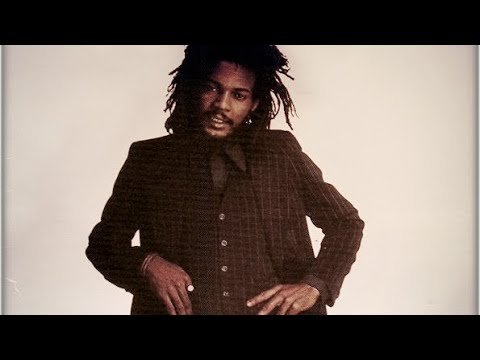
Image source: credited release/catalogue artwork; artwork rights remain with the relevant rights holders.
Part Four: The Rhythm Is the Composition
The key to hearing Pick a Dub properly is to stop thinking in terms of originals and copies. In Jamaican music a rhythm is common ground, not private property, and every version that gets built on it reveals something the others hide. Hudson understood that instinctively, and the title track proves it.
“Pick A Dub” traces straight back to “We Will Make It Up,” the Hudson vocal cut that became the foundation for Big Youth’s motorcycle-revving “S.90 Skank.” From there the same rhythm carried Augustus Pablo’s melodica reading, “Fat Baby,” and a horns-led version from the band Zap Pow called “Broken Contract” — both of which surface prominently inside this mix. So the dub album isn’t some isolated instrumental detour from a rhythm that otherwise lived quietly. It’s one room in a house whose other rooms were already full of singers, deejays, horn players, and dancers, and had been for two years by the time Hudson opened this particular door.
That’s why the opening feels so confident. Hudson doesn’t need to prove the rhythm can stand on its own — it already had, on Jamaican sound systems, for months. Here, he just gives it more air.
Listen across the Hudson catalogue
| Recording | Why it belongs beside Pick a Dub | Vault link |
|---|---|---|
| Pick a Dub (1974) | The core text: stripped, weighty, and deliberately paced. | Listen |
| Flesh of My Skin (1974) | Hudson’s parallel, vocal-led album statement — recorded in London the same year, under the same restless instinct for the LP as a complete world. | Listen |
| Entering the Dragon (1974) | Originally released in Jamaica as Strength to Strength (1973) before its UK reissue under this title — an earlier stop on Hudson’s album-minded trajectory. | Listen |
| Nuh Skin Up Dub (1979) | A later dub statement that shows how Hudson’s method developed once the wider genre had caught up with him. | Listen |
Part Five: Six Doors Into the Record
A full track-by-track breakdown can make dub look like a technical exercise. Better to treat these as six entrances into Hudson’s world.
1. “Pick A Dub”: a rhythm with a memory
The title track doesn’t need to explain its ancestry — it just moves with the self-assurance of a rhythm that’s already been tested in public, repeatedly, on real dancefloors. Melodica, bass, and drum don’t compete for the lead; they circle one another. Listen for how the mix keeps opening empty space around the bassline. The emptiness isn’t an absence of ideas — it’s part of the groove’s authority.
2. “Black Heart”: Hudson’s private gravity
The Hudson estate traces “Black Heart” to two earlier Hudson vocal cuts, “Fight On, Fight On” and “True to My Heart,” both released on his own Mafia label. In dub form, the emotional centre is no longer a lyric — it’s the downward pull of the rhythm itself. Hudson makes the track feel less like a performance and more like a pressure system moving through a room.
3. “Michael Talbot Affair”: a song becomes an instrument
This one has the longest paper trail on the whole record, and it’s worth tracing in full because it shows exactly how Hudson’s mind worked. Delroy Wilson recorded a Rasta-repatriation-themed reworking of the old American folk standard “House of the Rising Sun” for Hudson, released as “Place in Africa” (also known as “Addis Ababa”), thick with fuzz-guitar overdubs. That recording was itself covered by the duo Skiddy & Detroit as “The Exile Song” on a Mafia 7-inch. By the time Hudson got around to dubbing it out for Pick a Dub, retitled “Michael Talbot Affair,” the song had already crossed continents, genres, and at least three separate vocal treatments. The point isn’t to crown one version as the “real” one — it’s that Hudson’s dub makes all that inherited material speak differently again.
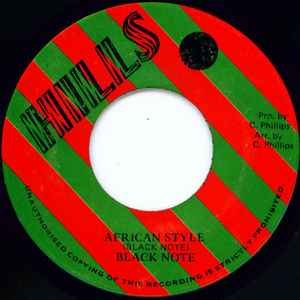
Image source: Discogs release r9293240; label artwork rights remain with the relevant rights holders.
4. “Don’t Move” and “Blood Brother”: stillness as method
“Don’t Move” comes from a previously unheard Hudson vocal called “Be Still” — itself a version of a song Derrick Morgan cut in 1962 for Leslie Kong’s Beverley’s label, recorded as an answer to Prince Buster’s “Blackhead Chinaman” during the two singers’ famous early-’60s recording rivalry. That vocal only surfaced decades later, released courtesy of Hudson’s biographer and discographer Vincent Ellis on behalf of the estate. “Blood Brother,” by contrast, has no known vocal counterpart in any account of the sessions — just a horn refrain and some genuinely excellent guitar work, standing entirely on its own. Together the two tracks show both halves of Hudson’s method: the deep transformation of existing material, and the confidence to let a rhythm stand with no narrative attached at all.
Two more rhythms are worth a mention before the album’s final pair of doors, even without full entries of their own. “Dreader Than” started life as “Wild Fire” on a 1974 Mafia 7-inch, resurfaced two years later as “Shoulder to Shoulder” on Dynamic’s Weed Beat subsidiary, and turned up a third time as the reflective “Five More Minutes of Your Time” on Torch of Freedom. And the two cuts of “In the Rain” rework the Dramatics’ 1972 Stax/Volt hit of the same name — a song that sold a million copies in the US. Where the American original leaned on storm sound effects, the Jamaican interpretation strips it back to sparse drum and bass, and both approaches work.
5. “Black Right” and “Satta”: joining a wider Jamaican language
“Black Right” and “Satta” were cut specifically for Pick a Dub, built on two of the most durable rhythms in Jamaican music history: “Declaration of Rights” and “Satta Amasa Gana.” Both began life as Abyssinians recordings cut at Studio One on Brentford Road in 1969 — though “Declaration of Rights” was a Coxsone Dodd production, while “Satta Amasa Gana” (Amharic for “give thanks”) was self-produced by the group for their own Clinch label. Between them, these two songs are among the most heavily versioned in reggae’s whole history, sung, toasted, and dubbed by dozens of artists across five decades. Hudson wasn’t imitating anyone by using them — he was recognising that some rhythms had already become shared public language, forms that could carry new meaning every time a producer changed the balance of drum, bass, horn, and silence.
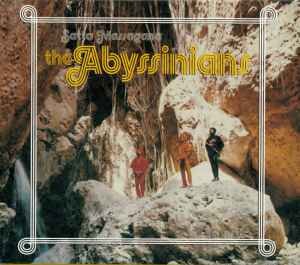
Image source: Discogs search; artwork rights remain with the relevant rights holders.
6. “I’m Alright” and “Depth Charge”: soul materials under Jamaican pressure
“I’m Alright” rides the rhythm behind Horace Andy’s “Don’t Think About Me,” first cut on Mafia in 1973 — one of the best records by an artist who made more great ones than almost anyone else in reggae. Hudson kept coming back to it himself, for the brooding “Melody Maker” and for “War War” on Entering the Dragon, and other producers weren’t shy about it either: Dino Perkins’ “Skin Him Alive,” Big Youth’s “Can You Keep a Secret?,” and Jah Whoosh’s own “I’m Alright” all ride the same foundation.
“Depth Charge” reaches further outward still. Its roots lie in “Still Water (Love),” written and produced by Motown’s Smokey Robinson and Frank Wilson, a transatlantic hit for the Four Tops in 1970. The vocal fragments audible here come from a previously unreleased Hudson recording — apparently cut for an unrealised album project aimed at courting an American soul label directly. A separate, disco-leaning rework of “Still Water” later turned up as a UK twelve-inch on Tunde Records in 1977. Hudson’s use of soul source material was never a casual borrowing gesture; he heard a genuine route by which Motown and Stax songwriting could be rebuilt entirely inside a Jamaican rhythm economy.
This is where the album is most revealing. Hudson’s world was never sealed off — American soul, Kingston sound systems, Studio One classics, deejay culture, and the hard logic of a bassline all meet in the same mix. And yet the record never sounds like a collage. Hudson’s production makes every source subordinate to the atmosphere he built around it.
Part Six: Not First, Not Flashy, but Foundational
The standard superlatives around Pick a Dub need a little care. It was not the first dub album, and its greatness doesn’t depend on that claim being true. Nor is it the most spectacular early dub record — anyone coming to it expecting constant studio fireworks in the King Tubby or Lee Perry mould may initially find it restrained.
That restraint is the achievement. Hudson’s dubs aren’t built to show off the machinery. They’re built to demonstrate control — which instrument to remove, which fragment to repeat, which silence will make the bassline feel larger when it finally returns. The studio here isn’t a place of tricks; it’s a place where weight gets measured.
The record’s critical reputation has only grown with distance. Writer Jon Savage, in his punk history England’s Dreaming, once called it “the greatest dub album ever, twelve cuts, all fantastic” — a claim plenty of dub heads would want to argue about King Tubby or Lee Perry, but not one that’s hard to understand once you’ve sat with the record a few times.
Its second life in Britain owes a great deal to Blood & Fire, the Manchester reissue label founded in 1993 by reggae historian Steve Barrow, former Mothmen vocalist Bob Harding, Simply Red’s Mick Hucknall (who bankrolled the label through its early years), Elliot Rashman, and Andy Dodd. The label’s whole premise was treating Jamaican music with the same seriousness jazz reissues had long received — proper sourcing, proper credits, proper sleeve notes. Pick a Dub became the label’s third release in 1994, catalogue number BAFCD003, with liner notes co-written by Barrow himself and Dennis Alcapone. That edition placed the album in front of a new generation of listeners looking for dub that felt less polished than the big late-’70s studio productions, and more intimate than a conventional reggae album —
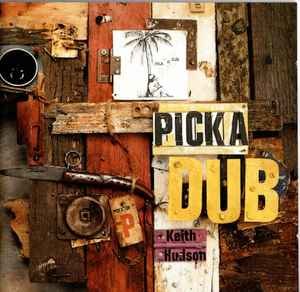
Image source: Discogs, Blood & Fire release listing; artwork rights remain with the relevant rights holders.
Listen to the Blood & Fire Vault upload
Part Seven: The Afterlife of a Private Architecture
Pick a Dub‘s success pulled Hudson toward the biggest opportunity of his career, and it’s worth following that thread to its actual end rather than leaving the story at the reissue. In January 1976, on the strength of records like this one, Hudson signed an eight-album deal with Virgin. The first release under that contract, a funk-leaning album called Too Expensive, was a critical and commercial flop, and Virgin dropped him not long after. Hudson relocated again, this time to New York, where he founded his own Joint International label and released Brand and its vocal companion Rasta Communication — records that, to a shrinking but devoted audience, further sealed his reputation as one of reggae’s genuine originals. He died in New York on 14 November 1984, at 38.
Hudson’s catalogue rewards listeners who move sideways rather than only forward from here. Flesh of My Skin* offers a vocal and conceptual counterpart to the same album-minded instincts.
For one later, version-led route into digital and experimental practice, see electronic dub.
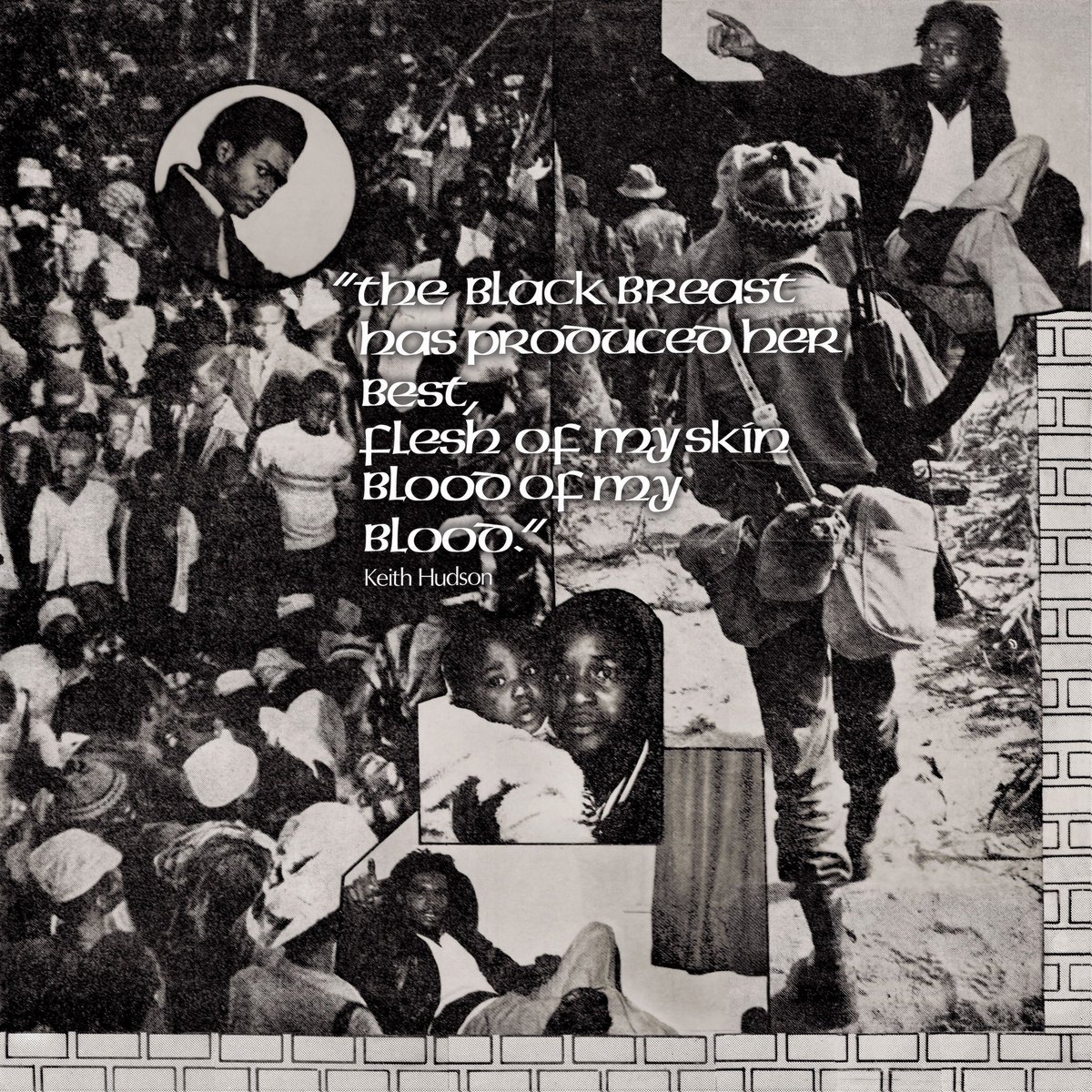
Image source: Discogs master release; artwork rights remain with the relevant rights holders.
Entering the Dragon — recorded first as Strength to Strength back in 1973 — catches an earlier stage of that same trajectory.
Image source: Discogs release search; artwork rights remain with the relevant rights holders.
Nuh Skin Up Dub, cut with Soul Syndicate five years later, shows that Hudson never abandoned dub’s possibilities once the wider genre caught up with what he’d already been doing.
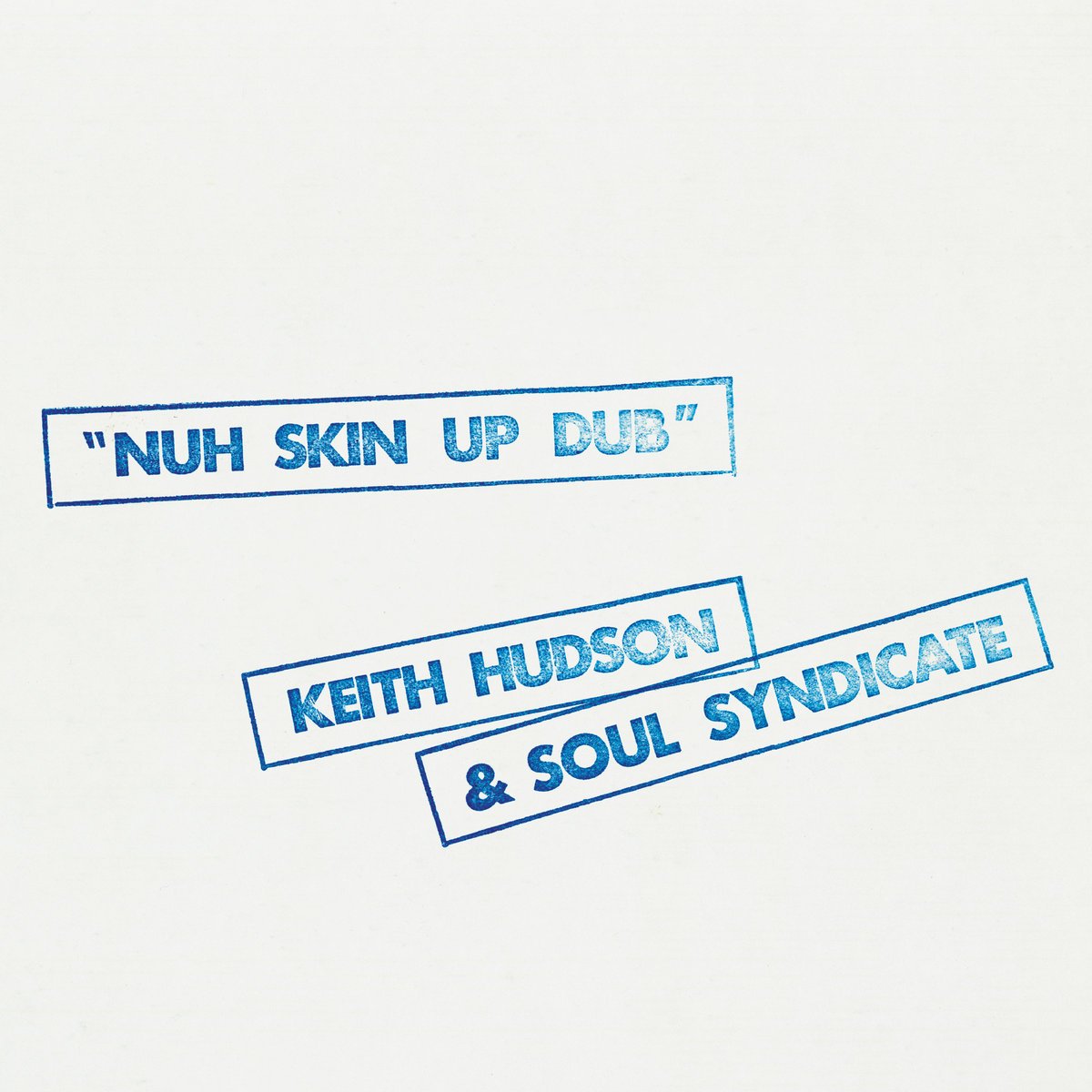
Image source: Week-End Records / retail catalogue artwork; artwork rights remain with the relevant rights holders.
The connection between all of these records isn’t just the artist’s name on the sleeve. It’s a way of hearing. Hudson repeatedly treats a rhythm as an environment, not a backing track — the singer may enter, the deejay may enter, a melodica or horn line might take the foreground, but the rhythm itself remains an independent force with its own history and its own future. That’s why Pick a Dub still sounds so modern. It anticipates the whole logic of the remix without ever surrendering to the idea of endless, disposable revision. Every cut here feels final, even when you know it’s one version among many.
What to Listen For
| Cue | Listen for it |
|---|---|
| The bass as narrator | Hudson often lets the bass carry the emotional statement a singer would normally make. |
| Vocal fragments, not vocal leads | Notice how voices enter as texture, memory, or warning — never as the record’s centre. |
| The return of the rhythm | The strongest moments usually arrive after Hudson removes an element and lets it come back. |
| Sparseness versus emptiness | These mixes are uncluttered, but the space inside them is always active, never dead. |
| Version as history | When a rhythm feels familiar, ask what earlier singer, deejay, or instrumental cut might be living inside it. |
Honest Gaps
Pick a Dub‘s early issue history is unevenly documented, and the biggest open question is the release year itself. The 1974 dating followed here matches United Reggae’s discography, Wikipedia, and every reissue label that has handled the album since — but the Hudson estate’s own liner notes state flatly that the album came out in 1975, and place it after two other dated 1974–75 releases in the same narrative. Neither source is obviously wrong, and this article isn’t going to pretend the matter is settled just because one date is more commonly printed.
The specific rhythm lineages in Part Five follow the Hudson estate’s detailed liner notes, which draw on interviews with several of the people actually involved. Where no vocal counterpart is documented for a track — “Blood Brother,” most notably — this article preserves that uncertainty rather than inventing one.
Vault Listening
- Keith Hudson — Pick a Dub (1974)
- Keith Hudson — Pick a Dub (1974), Blood & Fire Vault
- Keith Hudson — Flesh of My Skin (1974)
- Keith Hudson — Entering the Dragon (1974)
- Keith Hudson & Soul Syndicate — Nuh Skin Up Dub (1979)
Sources and Further Reading
- Noel Hawks, liner notes for Pick A Dub – Keith Hudson & Family Man (Deluxe Edition), Keith Hudson Music: https://keithhudsonmusic.com/pick-a-dub
- United Reggae, discography entry — Keith Hudson: Pick A Dub: https://unitedreggae.com/discographies/1974/keith-hudson-pick-a-dub;826/
- Sound System Culture — Keith Hudson: Pick Up A Dub: https://soundsystemculture.org/keith-hudson-pick-up-a-dub/
Additional biographical and label-history detail was cross-checked against Wikipedia’s entries for Keith Hudson, Harry J, Sylvan Morris, Soul Syndicate, and Blood and Fire (record label); Reggae Vibes’ Hudson and Sylvan Morris profiles; and contemporary retail write-ups from VP Records and Soul Jazz Records.
Explore further
find Keith Hudson — Pick a Dub in The Vault. The full album is available in the archive with other foundational Jamaican dub recordings.
Related Deep Dives
- Continue with Augustus Pablo & King Tubby — King Tubbys Meets Rockers Uptown — a companion Deep Dive into a different but equally influential dub language.