Roots & Dub Vault — Deep Dives, No. 1
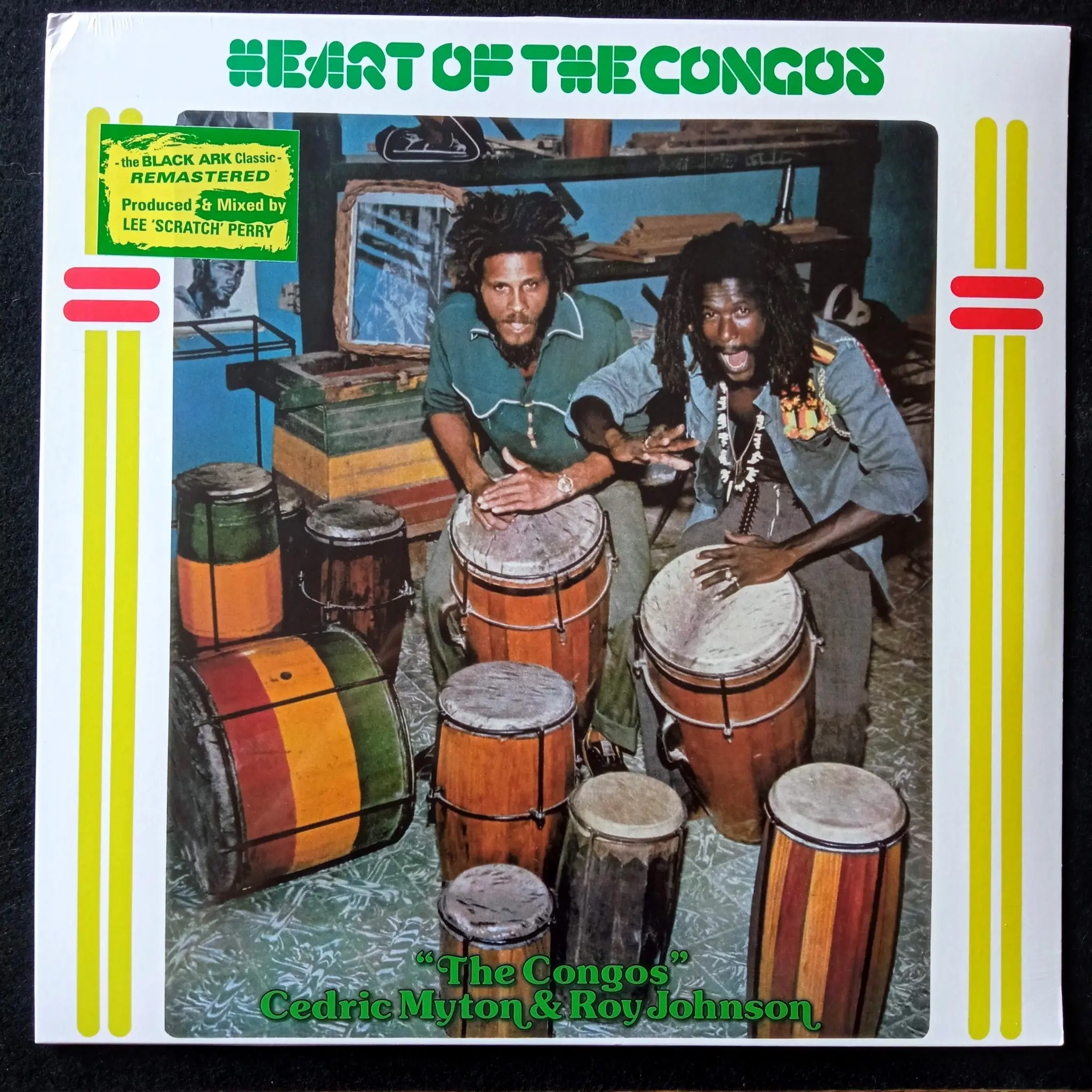
Most albums have one release date. The Heart of the Congos album has an argument.
Ask a serious collector what year it came out and you'll get 1977, which is right. Ask which mix they own and the conversation gets complicated fast — because the record that most of the world fell in love with is not the record that was originally pressed in Kingston. Somewhere between the first few hundred copies going out the door and the album's slow crawl across Europe, Lee "Scratch" Perry went back into the Black Ark and rebuilt it. He drowned the vocals in delay, pushed the piano back, piled on percussion and crashing cymbals, let songs roll out into extended dub, and dropped in a mooing cow that wasn't there before.
That second version became the canonical Heart of the Congos. The original stayed so scarce that for forty years the only way to hear it officially was not to hear it at all.
This is the story of how that happened — and of the three voices, the four-track tape machine, the shelved contract, and the twenty-year silence that stand behind what a lot of people will tell you is the greatest reggae album ever made.
It is also, in places, a story where the sources flatly contradict each other. Where that happens, this piece says so rather than picking the tidiest version. There is enough drama in the documented record that nobody needs to invent any.
Part One: Three Roads to Washington Gardens
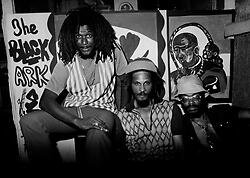
The Congos were not a group that formed, rehearsed for years, and then walked into a studio fully assembled. They came together in pieces, and the last piece arrived after the tape was already rolling.
Cedric Myton
Cedric Myton was born in 1947 in Saint Catherine parish. By the time he reached the Black Ark he had already had three musical lives. He had sung with the Tartans in the late 1960s — a rocksteady group whose lineup included Prince Lincoln Thompson and Devon Russell, and who scored with sides like "Dance All Night" and a cut for Duke Reid's Treasure Isle. He spent time around Ras Michael's circle. He recorded with the Royal Rasses, the group Prince Lincoln Thompson would later make famous.
What Myton brought to the Congos was a falsetto that doesn't really have a comparison point in reggae. It isn't a sweet-soul falsetto and it isn't a doo-wop falsetto. It sits high and clear and slightly eerie, and it's the sound most people are actually hearing when they say they love this record.
Roydel "Ashanti" Roy Johnson
Roydel Johnson — Congo Ashanti Roy — came from Hanover parish, in the far west of the island. He is the group's connective tissue to Perry himself: the two of them attended the same school in the same parish, and their mothers were friends. Perry was the older of the two. Roy has described them as childhood running partners who used to go to sound system dances together and, by his own cheerfully immodest account, were the best dancers in the parish.
Before the Congos, Roy played guitar and sang around Kingston, including work connected to Ras Michael and the Sons of Negus. He is the tenor — the voice that sits underneath Myton's falsetto and gives it something to lean on.
A flag on the dates: Roy's birth year is genuinely disputed across sources. Wikipedia gives 12 April 1943, in Kendal, Hanover. Several artist-database pages give 1947. In a 2012 interview with the Quietus, Roy said himself that he was born in 1944. Three sources, three answers, one of them from the man himself. This piece doesn't resolve it, and you should be suspicious of anyone who states it flatly without saying which source they're using.
There's a similar wobble on how and when Myton and Roy actually met. In that same Quietus interview, Roy describes the two of them as having almost grown up together, having both ended up in the same harbour town. A few paragraphs later in the same conversation, Myton dates their meeting to 1973 or 1974. Both statements are in the same published interview. Memory is like that thirty-five years on, and it's worth knowing that even the principals don't fully agree.
Watty Burnett
Watty Burnett's road was the longest and, in some ways, the most interesting — because he was already a Black Ark fixture years before the Congos existed.
Burnett was born in Port Antonio, on the northeast coast — a seaport town, and a musical one. Junior Murvin came from the same area. So did Mikey Dread. Burnett's father played guitar in church, and Burnett grew up singing in the school and church choirs and learning bass and drums.
There was no studio in Port Antonio. So from the age of fourteen, Burnett started making weekend trips to Kingston — and the producer he wanted was Perry. He cut his first record at sixteen, as half of a duo with a singer named Jimmy Nelson, working under the names the Soul Twins and Jimmy & Derrick. That first song, "Pound Get A Blow," was for Perry, and was later reissued in Britain — miscredited, on at least one compilation, to an entirely different group.
Burnett trained as an electrician, which is not a footnote: he has been clear that having a trade is part of why he never had to leave music when money got thin. His partner Jimmy went back to electrical work. Burnett stayed.
Through the early 1970s he cut a run of solo sides for Perry — "Babylon A Fall," "I Man Free," "Rise & Shine," "Open The Gate," "Rainy Night In Portland." Several of them were recorded at the Ark before the studio was even finished. Perry initially released him as "King" Burnett, a name Perry chose because he couldn't get over the fact that such a small man had such an enormous voice. Burnett didn't like it — too strong, he thought — and it was dropped.
Here is the part that matters for what comes later: Perry used Burnett as his ears. Burnett has said Perry wanted him in the studio early in the morning during mixdowns, and would ask him what the sound needed. Burnett would say the bass was too hot, or the drums needed more, and Perry — who had no obligation to listen to anybody — would try it. Burnett only learned years afterwards, secondhand, that Perry had told someone he had a perfect ear.
So when the Congos sessions needed a bottom end, the man Perry reached for was not a stranger. He was already family.
Part Two: The Room
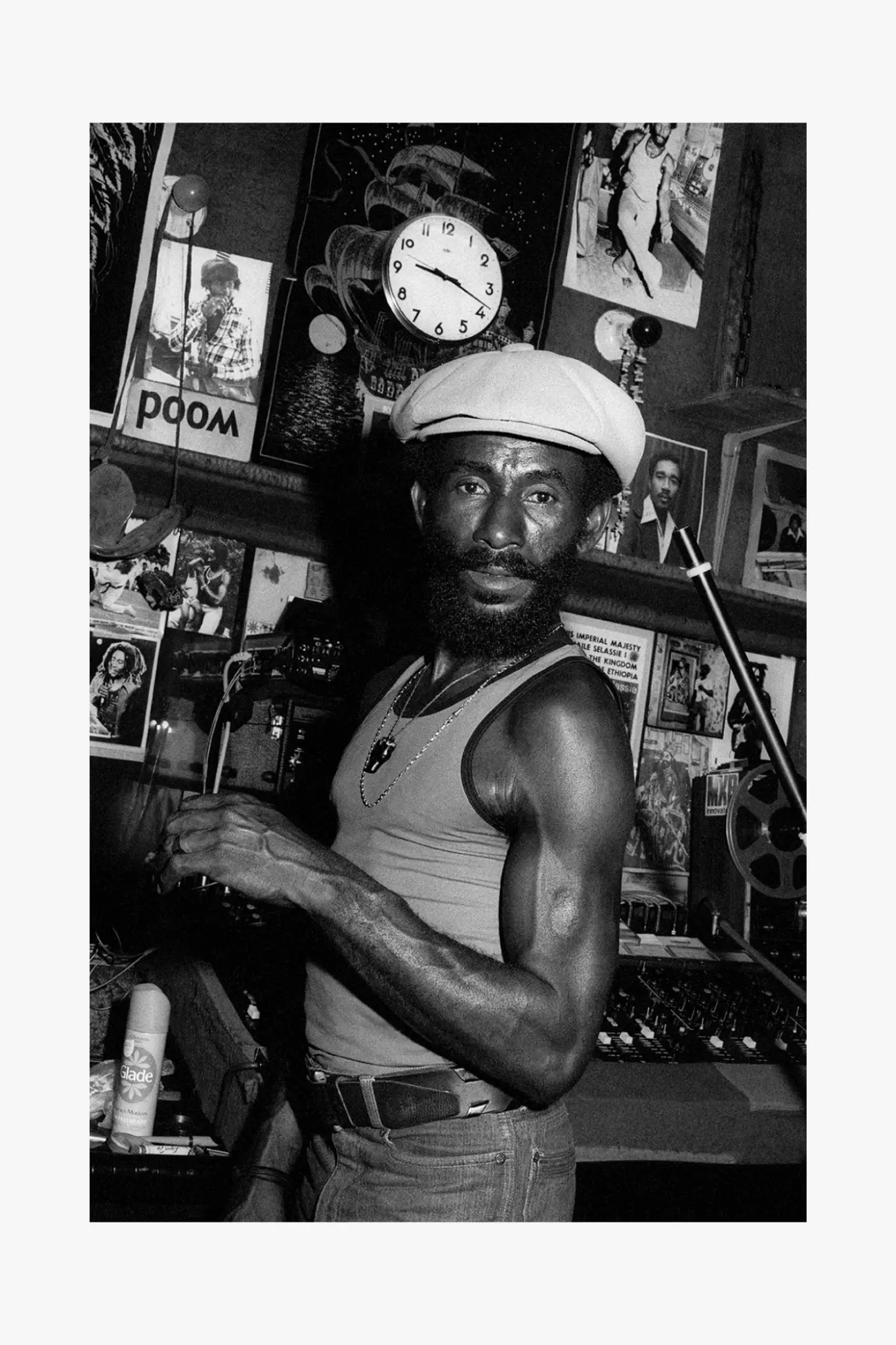
You cannot explain Heart of the Congos without explaining the building it was made in, because a lot of what people hear as mysticism on this record is actually architecture and equipment limitation.
The Ark itself
Perry built the Black Ark in 1973 in the yard behind his family home in Washington Gardens, Kingston — the addresses given in various sources are 5 Washington Gardens and Cardiff Crescent, which are the same premises described differently. It opened for business in 1974.
Burnett's description of the interior is the best one on record, and it's not romantic. He describes it as tall and box-like, as though someone had thrown up a tinderbox and run it straight into the air, with no architectural plan behind it. Crucially: no windows. One door. That, he says, is exactly why it was called the Ark. Once you were in, you were in.
He also remembers Clancy Eccles turning up, looking around, and laughing at the idea that anyone could record in a place like that.
The gear
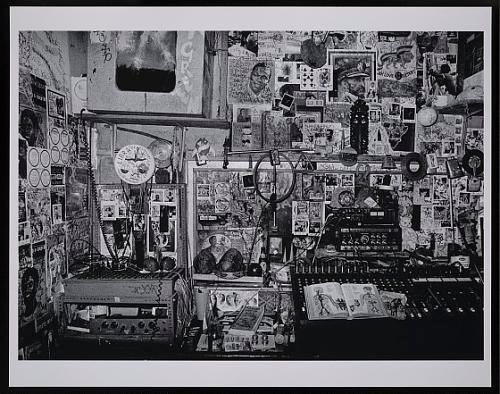
The equipment list is genuinely modest, and it is worth spelling out because the gap between what was in that room and what came out of it is the whole story:
- A Teac A-3340 quarter-inch four-track reel-to-reel. In 1976 this was a machine you'd find in homes, schools and youth clubs. Abbey Road had moved past four-track a decade earlier. Perry's competitors at Channel One and Joe Gibbs were working on sixteen tracks.
- A Soundcraft mixing desk, which replaced an earlier Alice mixer around 1975. This was the one piece of genuinely current professional gear in the building.
- An Echoplex tape delay unit.
- A Roland RE-201 Space Echo.
- A Grantham spring reverb.
- A Mu-Tron phaser — and, importantly, an early Mu-Tron Bi-Phase. The Bi-Phase gave Perry two independent phase-shifting circuits rather than one. That is the difference between phasing a guitar and phasing an entire mix. It's the single piece of hardware most responsible for the record's underwater, three-dimensional quality, and you can hear it working hardest on the hi-hats.
Burnett says the equipment barely changed across the Ark's whole lifespan. A bigger drum kit came from London. Another keyboard. A few extra microphones, including room mics used to capture that enormous ambient space. Otherwise it stayed the same little four-track setup throughout.
There's also a widely repeated story that Chris Blackwell sent Perry a sixteen-track machine and a better console to improve the Ark's sound quality, and that Perry got rid of them and carried on with the four-track. That story circulates in enough places to be worth mentioning, but this piece hasn't found it in a primary source, and it's the kind of anecdote that grows in the telling. Treat it as folklore until someone produces the receipt.
How Perry actually worked
Two technical points explain more about this album's sound than any amount of talk about ganja smoke and mysticism.
First: Perry mixed while recording. Burnett is explicit about this. Most of the tracks weren't recorded flat and then mixed later — Perry was riding EQ, reverb and delay as the take happened, printing effects into the recording itself. He could do it precisely because the setup was small: four tracks, one board, everything within arm's reach.
Second: Perry bounced tracks, and the degradation became the sound. With only four tracks available, the only way to add more parts was to submix existing tracks down onto one track to free up space. Every time you do that on quarter-inch tape you lose fidelity. Most engineers treat that as damage to be minimised. Perry treated it as an instrument. For a wider listener’s introduction to these Jamaican dub mixing and studio techniques, see the Dub Reggae guide.
. Steve Barrow made exactly this point in his notes for the Blood & Fire reissue: the loss introduced by bouncing became an essential ingredient of the mix rather than a flaw in it.
That is why the drums on "Fisherman" sound like they're crumbling at the edges. They've been through the machine more times than the vocals have.
The economy of the place
The Ark ran on something other than money, which is part of why it produced what it did and part of why it eventually collapsed.
Burnett describes it as a family rather than a business. When Perry called a session, nobody discussed a fee first. Musicians came because the vibe was better than the money elsewhere — Burnett himself once left for Channel One, where the pay was genuinely better, and came back within the same year because the atmosphere wasn't the same. Perry generally didn't rent the studio out; it was for his artists and his circle, though people like Coxsone Dodd and Sonia Pottinger did work there.
The roster of musicians who drifted through was extraordinary: Ernest Ranglin and Hux Brown on guitar, Boris Gardiner and Val "Dougie" Douglas and Clinton Fearon on bass, Sly Dunbar and Mikey "Boo" Richards and Benbow Creary on drums, Winston Wright and Keith Sterling and Wya Lindo on keys, Geoffrey Chung, and a horn section that could include Tommy McCook, Vin Gordon, Herman Marquis and Bobby Ellis.
Burnett makes a lovely observation about Ranglin specifically — that if you listen closely he's playing rhythm and lead simultaneously, sounding like two or three guitarists at once, and that the freedom Perry gave players is what allowed that.
He also notes something less romantic: Perry restricted the bass and drums tightly, keeping those under his own control, while giving everyone else room to invent. That is not chaos. That is a producer with a very clear idea of where the foundation sits.
Part Three: Making the Record
How long did it take?
Here the sources split, and it's a real split rather than a quibble.
Ashanti Roy has said plainly that the album took three years, because Perry would work, then listen, then work some more, chasing perfection. Roy and Myton both describe being at the studio constantly — every single day, sharing vibes, building the harmonies.
But David Katz, Perry's biographer and the most rigorous researcher on this subject, dates Perry's first connection with the Congos to only several months before early 1978. The Blood & Fire reissue credits give the recording dates as 1976/77. The Quietus dates production to 1976 and 1977.
Three years and "several months" cannot both be true of the same process. The most likely reconciliation is that Roy is counting from when he and Myton first started writing and demoing the material — including early songs like "Solid Foundation," "Children Crying" and "Congoman" — through to the album actually being finished and re-mixed, while Katz is dating the specific Congos-Perry working relationship. But that is a reconstruction, not something any source states. What's solid is that the sessions were unusually protracted by Jamaican standards of the day, where an album could be cut in a week.
The four-track discipline
Roy has explained what four tracks meant in practice, and it's the most useful technical detail any of the Congos ever gave in an interview: you could not lay the rhythm first and come back for vocals later. Drums, guitars, voices — everything had to go down together, which meant every single person in the room had to be exact. Nobody could make a mistake, because there was no isolated track to fix it on.
So they went over the music again and again before committing it. What sounds spacious and dreamlike on the finished record was built under conditions that allowed almost no margin for error.
Myton's summary of Perry's relationship with that limitation is the one that sticks: Perry, he said, could work magic with those four tracks.
The third voice arrives
This is the part of the story that gets told backwards most often, including in a lot of otherwise careful writing.
Myton and Roy began the Heart of the Congos sessions as a duo. Watty Burnett was around the studio — as he had been for years — and while they were cutting vocals, Perry decided the sound needed a bottom. He needed a baritone.
Perry told Burnett to go and put vocals on the tracks. Burnett did "Fisherman" first. Myton and Roy started laughing — the good kind of laughing, apparently. Perry didn't hesitate; he told Burnett he wanted him on everything. Burnett's account is that it was all one cut, done there and then.
When the record was finished, Myton and Roy asked him to join properly. Burnett's instinct was to say no — he had a solo career he'd been building since he was sixteen and he didn't want to give it up. It was Perry who talked him into it, telling him he could still be a solo artist but that he wanted him with this group, because nothing could fathom the sound the three of them made together.
So the trio that defines this record was assembled inside the room, mid-session, on a producer's hunch.
There's a small piece of physical evidence for how tentative Burnett's commitment was at that stage: he isn't on the original album cover photograph. He went to Grand Cayman the weekend the picture was taken, because he hadn't yet committed himself a hundred per cent to being a Congo.
What Burnett actually sang
One correction worth making to the standard account, from Burnett himself: he did not simply sing baritone parts on a handful of tracks.
He did nine tracks on the album. And he's slightly exasperated by the assumption that he was only the low voice — he could sing mid-range, and did, layering two or three vocal parts per rhythm depending on what the track needed. The baritone was his strongest register, not his only one.
He also has a nice objection to the phrase "backing vocals." When a singer is just going "ooh" and "aah," he'll accept the term. But when the second voice is singing actual words, he says, that isn't backing. That's assisting.
The band, and the "Fisherman" anomaly
The sessions drew on the Upsetters at their peak. Ernest Ranglin on guitar. Sly Dunbar and Mikey "Boo" on drums. Boris Gardiner and Geoffrey Chung on bass. Myton has also named Winston Brubeck, Keith Stewart and Billy Johnson among the players, describing them as the cream of the crop.
The Meditations provided backing vocals throughout, and members of the Heptones contributed harmonies. Gregory Isaacs — recording at the Ark himself around this period, and a man who used to practise guitar in Ashanti Roy's own yard — sang on "La La Bam-Bam."
And then there's the "Fisherman" rhythm, which is the best single illustration of how these sessions actually ran. Myton has explained that the rhythm was cut across two days: Boris Gardiner played bass on the first day, Geoffrey Chung on the second, and the result had a noticeably different flavour on day two.
Whether that was planned or a happy accident isn't documented. Either way, two different bass players' feel is now permanently baked into one of the most versioned rhythms in Jamaican music.
Part Four: The Songs, and What They're Actually About
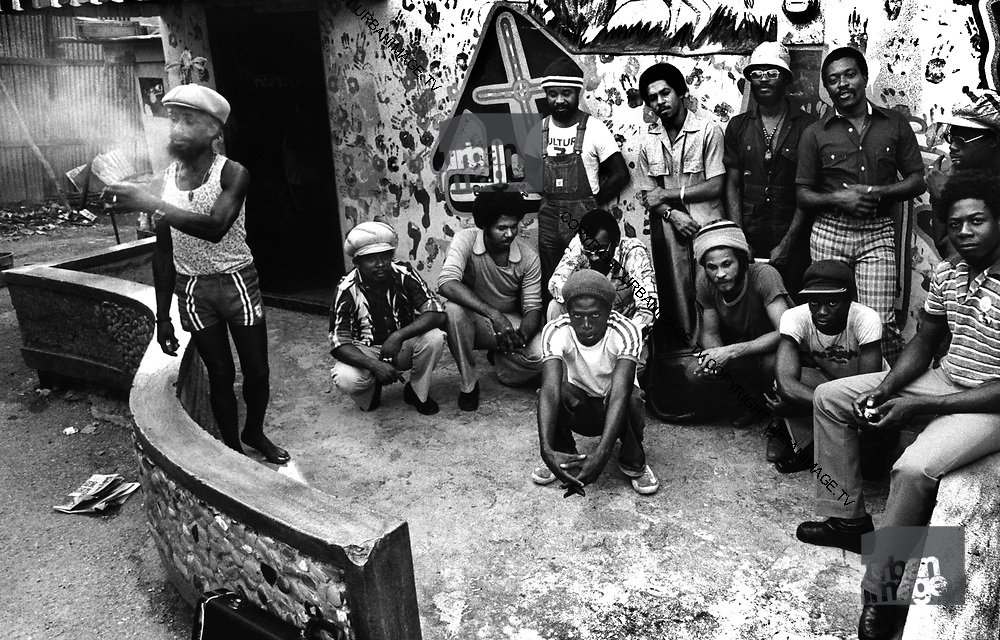
The Congos described their approach as "churchical" — sacred music built out of the material of ordinary life rather than out of hymn-book abstraction. That word is the key to the whole record, and it's worth unpacking rather than just quoting.
"Fisherman"
"Fisherman" doesn't begin as a metaphor. It begins as a description. Ashanti Roy's explanation is disarmingly plain: they all came from a seaport town, so the song simply came.
That's literally true of Burnett, from Port Antonio, and true of the coastal world Myton and Roy moved in. And it's why the song works — because the fisherman in it is a real man with real children and a real boat before he is anything else. Only then does the song widen: a man feeding his family becomes a man responsible for feeding everyone hungry ashore, and from there it reaches the apostolic fishermen, Simon and James and John, and the idea of the fishers of men.
The song also contains a startlingly practical suggestion — that the fisherman might go and see a named collie man to get something to sell — which is exactly the kind of grounded, unpious detail that keeps the Congos from ever sounding like a sermon. And it ends with a warning to reach higher ground because rain is coming, which is either weather or the Flood, depending on how you're listening.
The Ark, the Congoman, and the warning songs
"Ark of the Covenant" is the record's most self-referential moment: the biblical Ark, planted inside Perry's Black Ark. Myton has said that Perry raised the image of the Ark and the song came together the same day — written, made and finished on the spot.
"Congoman" turns African identity into a source of moral authority rather than nostalgia. "Children Crying" and "Sodom and Gomorrah" speak in the register of prophecy and warning, but their urgency is contemporary rather than antique — they're about hunger and upheaval in the Kingston of 1977, wearing scriptural clothing.
The drum underneath everything
The most important thing Ashanti Roy ever said about the Congos' music is that all their beats trace back to the fundeh drum — the Nyahbinghi hand drum. The spirituality isn't a layer applied on top of the rhythm. It is the rhythm. Both Myton and Roy identified as churchical and as coming from the Nyahbinghi tradition.
This matters for understanding what happened at the Ark next.
The Ark becomes a church
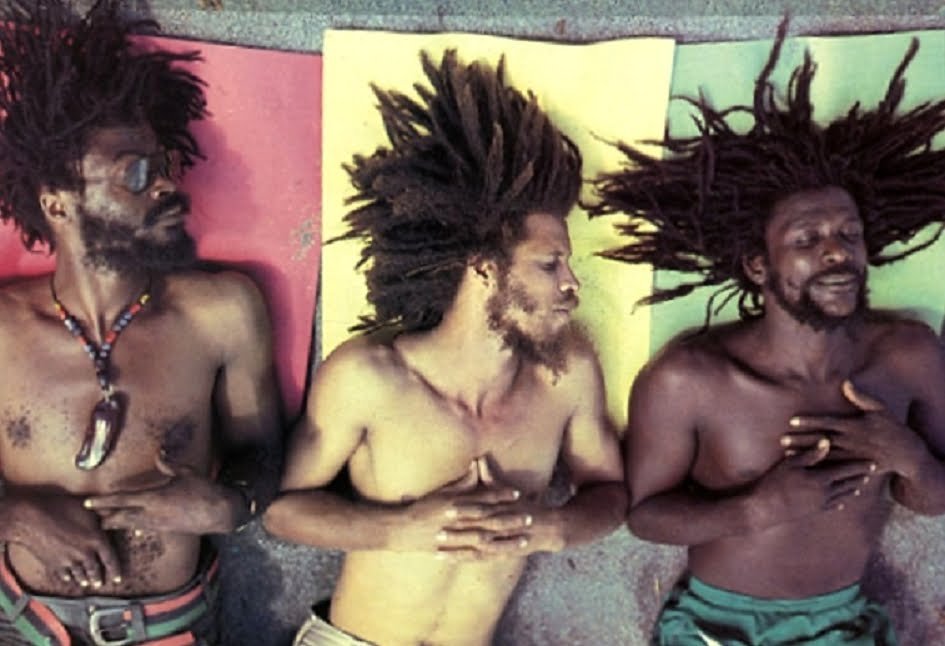
Through 1977 and into 1978, the Black Ark increasingly became a gathering place for the Niyabinghi Theocracy — a strict Kingston-based Rastafari order centred on Burru drummers, followers of Marcus Garvey, who had been holding groundation sessions since 1960. Their leader was an elder from Trench Town addressed as Pa-Ashanti.
Perry was the most prominent producer in Jamaica making music explicitly aligned with the Rastafari cause, and the order appointed him their "Minister of Music." Under the Congos' influence and the order's, Perry turned toward a more religious life and began knotting up his hair. More and more dreadlocked brethren assembled at the studio for rituals and all-night reasoning.
For a listener’s introduction to the music formed where Rastafari culture, harmony and studio craft meet, explore roots reggae music.
Katz notes, drily, that Perry continued during this same period to decorate the inside of the Ark with pornographic magazine pages, on the view that sex was itself a sacred act. Perry was never a simple man to summarise.
The Jamaica outside the door
None of this was happening in a peaceful country. Unemployment was at a high, food shortages were spreading, and political violence had escalated to the point where the leadership of both major parties was implicated in it.
In December 1977 came the Green Bay Massacre: twelve gunmen lured to a military firing range under the pretext of getting access to weapons, then fired on by a unit of the Jamaica Defence Force. Most died. A few escaped. Public outrage followed, in part because no attempt at arrest had been made.
In January 1978, two of the most feared political gunmen in Kingston — Claudie Massop of the JLP-aligned Shower Posse and Bucky Marshall of the PNP-backed Spanglers — met after Marshall's release from jail and called a truce, having concluded they were expendable pawns. Members of the Niyabinghi Theocracy attended the reasoning session. The peace treaty they announced led directly to the One Love Peace Concert, at which Bob Marley pulled Michael Manley and Edward Seaga onstage to join hands.
When Marley returned to Jamaica in February 1978 for the first time since the attempt on his life, he went — after a Rastafari rally at the National Arena — to a night-long groundation held by the Niyabinghi Theocracy downtown, alongside Lee Perry. Midway through, Kingston was hit by an earthquake.
That is the world this album came out of. The warnings in these songs were not literary devices.
Part Five: The Second Mix — What Actually Changed, and Why
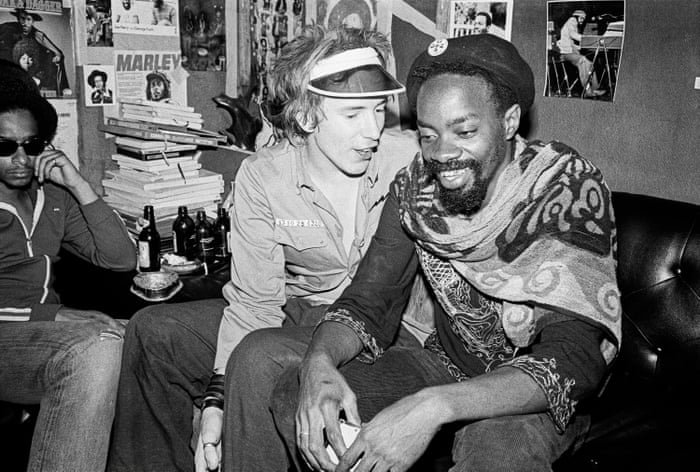
Now we get to the thing that makes Heart of the Congos structurally strange among great albums: it exists in two substantially different producer-sanctioned versions, and the more famous one is the later one.
The sequence of events
According to Katz's account, the order runs like this:
- The first Jamaican pressing appears on Perry's Black Art label in late 1977 — a small run, said to be only a few hundred copies. This is the original mix: comparatively restrained, cleaner, fewer embellishments.
- In early 1978, copies of that pressing reach Britain in tiny quantities.
- Chris Blackwell travels to Jamaica with his lawyer, Tom Hayes, to negotiate. Contracts are signed. Island appears set to give the album an international release.
- Perry then remixes the album.
That fourth step is the one people miss. The famous version of Heart of the Congos — the one with the wild effects — was made after the deal was signed, not before. Perry was, on the most sympathetic reading, trying to make an already-strong record irresistible to an international label.
Compare the Mixes
Hear the difference between the original 1977 mix and the Blood & Fire reissue while reading this section.
Original 1977 mix
Blood & Fire CD1
What he actually did to it
Katz's description of the remix is specific: heavy delay applied to vocals, keyboards and guitar; the piano pushed down in the mix; manic percussion and crashing cymbals added; several songs extended out into dub sections.
United Reggae's comparison of the original against the later version confirms the same thing from the listening side — the 1977 mix is cleaner and more stripped down, and it lacks the mooing cow that appears on later versions of "Children Crying" and "Ark of the Covenant."
The cow
And here is the single best detail in this entire story, which most write-ups of the album never mention.
The cow is not a sample. It is not a sound effect record. It is Watty Burnett's voice, resonating through the cardboard tube from the middle of a roll of tinfoil.
The deepest voice in Jamaican vocal reggae, mooing down a kitchen-drawer offcut. That is the Black Ark method in one image: no budget, no proper equipment, total commitment to the idea.
Which version is on which pressing
For anyone trying to work out what they actually own, the rough shape is this — though pressing variants are a genuine rabbit hole and this is a summary, not a discography:
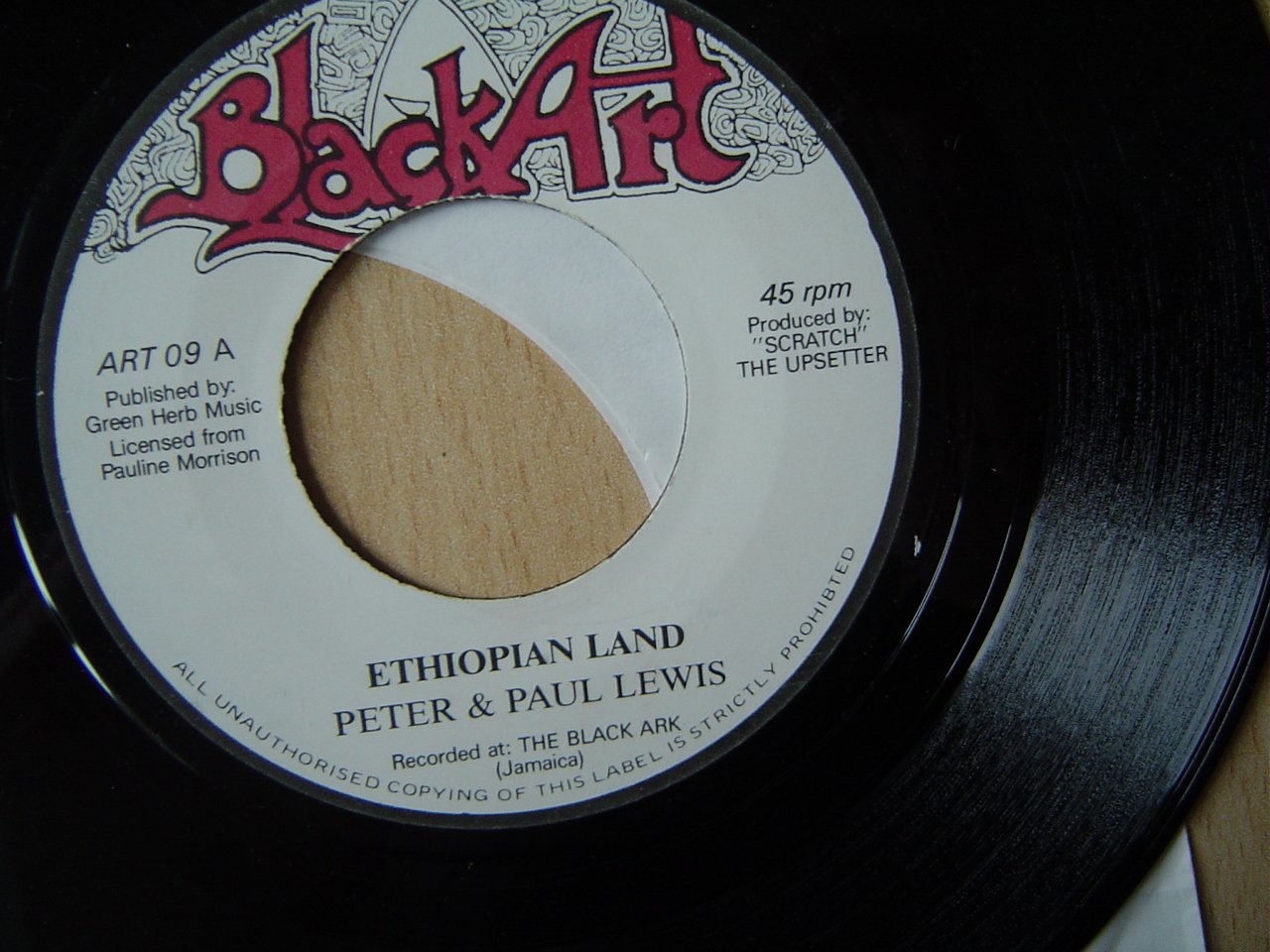
Black Art, Jamaica, 1977 (first press): original mix. Extremely rare. The holy grail. — Listen: the original record
Second Black Art press, 1978, and effectively everything downstream — Congo Ashanty (Jamaica), Jah Live (France), Go Feet (UK), and the various later reissues — carry the 1978 remix with the added effects.
Blood & Fire, 1996: the 1978 mix, remastered from the original quarter-inch Black Ark master tapes, plus bonus material. — Listen: CD1, the album · CD2, the bonus disc
VP Records 40th Anniversary Edition, 2017: the first official reissue of the original 1977 mix, presented alongside the 1978 version, dubs, disco mixes and a previously unreleased track.
If you want to hear the difference the remix made rather than read about it, put the original mix and the Blood & Fire CD1 side by side and go straight to "Children Crying." One has a cow in it. One doesn't.
One quirk worth knowing: the UK Go Feet edition is generally regarded as having excellent, dynamic sound — but its tracks are cut noticeably short compared to other pressings. You're trading length for punch.
Blood & Fire CD2: Bonus Material
12" mixes, dubs, and versions from the expanded reissue.
A flag on the Go Feet date. This is genuinely unresolved. Wikipedia and VP Records place the UK Go Feet reissue around 1980. Some reggae discography sites list it as 1978. And Watty Burnett, in a 2003 interview, refers to the Go Feet deal as happening in 1981 — and remembers it bitterly, as something arranged behind his back. Anyone who gives you a single confident year for this is choosing a source and not telling you.
Part Six: Why Island Shelved It
Island Records had publicity out for the album's release in April 1978. Then they simply kept it on the shelf. Twenty-plus years of reggae writing have chewed over why, and the honest answer is that there are at least four incompatible explanations on the record — and at least two of them come from people who were in the room.
Explanation one: Blackwell didn't rate it. Asked directly, Chris Blackwell's answer was that at the time he thought there was the album had "one great track and the rest of it was weak". That's the man himself, on the record, decades later. It's also, in retrospect, one of the more remarkable A&R misjudgements in the history of the genre.
Explanation two: it threatened Bob Marley. Ashanti Roy has said that Leslie Palmer, then working in Island's A&R department, told him the label spent a solid month of meetings deciding whether to put promotional weight behind Marley or the Congos. Max Romeo has made a structurally identical claim about his own Reconstruction — that Island signed artists who might compete with Marley and shelved them to clear the King's path. Romeo's summary is that they were all sacrificed to build the Marley empire, though he adds that at least the world got to hear reggae as a result.
Blackwell denies this directly. He has said he didn't push Marley above anyone else, that Marley simply had more going for him, and that Perry — like most reggae artists of the era — was embraced by the press but not by radio, and radio is what sold records.
Explanation three: a personal falling-out poisoned it. Ashanti Roy has recounted that tension developed between Perry and the group after Myton's young son claimed Perry had fed him pork — the most serious dietary taboo for a Rastafarian. Roy's suggestion is that Perry, furious, may have told Blackwell to leave the record on the shelf.
Watty Burnett flatly contradicts this. He says there was no pork cooked in that house. His version is that the friction came from Perry repeatedly saying that Roy couldn't sing — which Roy knew wasn't entirely unfair and therefore took hard — and that Myton was easily led into the dispute.
Explanation four: a label fight. Burnett's account adds a wrinkle almost nobody else mentions: that Virgin Records was also circling, that Island had the record first and didn't know what to do with it, and that something like blackmail was going on between the two companies. Island did release a couple of singles from the album on their Black Swan imprint.
So: Blackwell says the record was weak. Roy says the label protected Marley, and separately that a pork rumour soured it. Burnett says there was no pork, that the real rift was about Roy's voice, and that a label war was in play.
These cannot all be true. What's certain is the outcome, and Katz's assessment of it is hard to argue with: an album that was subsequently re-pressed on at least seven labels across four nations, and that sold strongly the moment it was reissued properly, is a difficult thing to justify having shelved.
Part Seven: The Break, and the Fall of the Ark
The end came quickly, and the Congos were entangled in it.
While Perry was still working with the group, two Congolese musicians from Zaire — Seke Molenga and Kalo Kawongolo — were recording at the Ark. Ashanti Roy's account is that they were brought there by Nadette Duget, a record executive working for CBS France. Roy noticed that where the Congos could cut three or four tracks in a day, the visiting musicians couldn't finish one — and Duget noticed the Congos.
She switched her attention to them, and offered a deal. Lured by the promise of a proper contract, the Congos left Perry's camp toward the end of 1978, after a bitter parting.
Burnett didn't want to go. He has said this repeatedly and with real feeling — that he didn't want to leave Scratch, that Perry took it hard, that it still bothered him decades later. His own diagnosis of why the group jumped is blunt: money, and heads that swelled too fast. Nobody in Jamaica was getting paid properly at that time, he points out — not even producers. He thought they could have absorbed that and achieved more by staying. He thinks they jumped the ship too quick.
Perry's response to the split was to trim off his budding locks, rejecting the group's position that inward faith had to be shown outwardly as dreadlocks. His anti-dread sentiment hardened from there and stayed with him for decades.
What followed at the Ark was a collapse that has since been mythologised out of all recognition, but whose documented components are grim and fairly ordinary: relentless financial demands from musicians, hangers-on and members of the religious order; extortion attempts by gang members; police and soldiers making menacing visits; an extended family that treated Perry as the sole breadwinner; and Perry himself working around the clock on rum and herb, barely eating or sleeping.
He began covering the studio walls with graffiti, then crossing out letters with X's, then covering whole walls in X's. His partner Pauline Morrison, who had handled much of the business side and provided what stability there was, eventually left. By the end of January 1979 the Black Ark was empty of visitors — the desk and tape machines still connected, the building still technically functional, but effectively finished.
Whether Perry had a breakdown, or was staging an elaborate performance to drive people away, or started with the second and ended up in the first, is disputed by people who knew him well. Perry himself said he wanted to make changes that would drive the hangers-on away, and that some of them concluded he was mad and disappeared — which was the point.
Burnett, asked why Perry ultimately burned the studio down, declined to give a simple answer. He described it as an energy nobody could comprehend or absorb, said he felt some of it himself, and said that if he did fully understand it he probably wouldn't say so.
That's a better answer than most of the confident ones in circulation.
Part Eight: Twenty Years in the Wilderness, Then the Rescue
The scattered years
Through the late seventies and eighties, Heart of the Congos existed as a rumour that kept resurfacing on different labels in different countries — Congo Ashanty in Jamaica, Jah Live in France, Go Feet in the UK, and a string of later pressings of varying quality. The Congos themselves fractured: Roy left over a royalty dispute connected to "Don't Blame It On I," Burnett went solo, Myton continued under the Congos name with other singers into the mid-eighties.
The album's reputation grew in inverse proportion to its availability, which is what tends to happen.
Blood & Fire, 1996
The rescue came from Britain. Blood & Fire — the reissue label run by reggae historian Steve Barrow with Mick Hucknall and T Elwing, with Andrea Lewis assisting on the ground in Jamaica — put out a remastered double-album edition in 1996.
The technical work was serious. The album was remastered from the original quarter-inch Black Ark master tapes, with one exception: "At The Feast," for which no usable master existed and which had to be taken from vinyl. Mastering was done by Kevin Metcalfe at the Town House in London, with digital restoration by Andy Walter at Room 63, Abbey Road. The package carried a 36-page booklet with Barrow's research and technical notes by Bob Harding on the difficulties of working with Black Ark tape.
The album itself sits on CD1.
CD2 is where the real collector value is. The bonus disc gathered genuinely scarce material: the "Congoman" 12" mix and "Congoman Chant," a dub of "Fisherman" previously only available as a Jamaican Upsetter 7", Perry's own B-side dub mix of "Ark Of The Covenant" from the 1977 Black Art 7", and a Disco Cork mix of "Solid Foundation" taken from the master tape of the Jamaican Upsetter 12".
Barrow's own assessment placed the record alongside Natty Dread, Marcus Garvey and Right Time — which, coming from him, is not loose talk.
It worked. VP Records' own account is that the Blood & Fire edition became a best-seller for the label and finally won the album the mainstream recognition that had eluded it for two decades. Burnett called it a rebirth, and said it was one of the best reissues he'd ever seen.
Blood & Fire stopped releasing records in 2007, and the expanded edition went out of print with them.
A note on Steve Barrow. Barrow died on 27 May 2026. If you have any interest in this record beyond what's written here, the physical Blood & Fire CD and its booklet remain the single best-researched document on the album, and nothing online — including this article — replaces it. Buy the original if you can find one.
The bootleg years
Because Blood & Fire's edition used the 1978 mix, the original 1977 version remained officially unavailable. In 2004 an underground Amsterdam outfit called Corn-Fed Productions put out an unofficial CD of the original mix, sourced from a vinyl copy. It wasn't legitimate, and it wasn't good quality by definition — but for a while it was the only way most people could hear what the Congos and Perry originally signed off on.
VP Records, 2017
For the fortieth anniversary, VP Records finally did the thing nobody had done: released the original mix officially. The 3CD edition brought together the 1978 album mix, a disc of dubs, disco mixes and 7"/12" versions, and — on the third disc — the original 1977 mix, plus a previously unreleased track, "Don't Blame It On I," with liner notes by Harry Wise.
An LP edition appeared for Record Store Day in April 2017, reportedly in a run of around 500 copies. The 3LP version issued that June did not include the original mixes; those were available on the digital release, the 3CD set, the RSD edition, or an original 1977 pressing you'd need to remortgage something to acquire.
One footnote for the mix-obsessed: listeners comparing the discs have noted that the relationship between the two mixes isn't a simple "restrained versus wild" split. On some tracks the 1978 version has the more extreme effects; on others, like "Fisherman" and "Open Up The Gate," the original is arguably the wilder one. The neat narrative that Perry simply added chaos to a clean record doesn't fully survive a close listen.
The rhythm that wouldn't die
In 2006, Blood & Fire released Fisherman Style — a one-rhythm album built on the "Fisherman" riddim, with new versions by Horace Andy, Big Youth, Dillinger, Prince Jazzbo, Luciano, Freddie McGregor, Gregory Isaacs, Max Romeo, Mykal Rose, Dean Fraser, Sugar Minott and U-Roy.
That list is its own argument. A rhythm doesn't attract that calibre of singer thirty years on unless it's genuinely foundational.
The Rhythm Lives On
Fisherman Style follows the riddim into its later life.
What to Listen For
If you're going back to this record after reading all that, a few things to keep your ears on:
- The drums on "Fisherman." Listen to how the opening snare hits have had all their brightness and attack stripped away before the reverb takes them apart. That's the sound of a drum track that's been bounced down onto a shared track more times than anything else on the tape.
- The two basslines. One fuzzy and enveloping, one squelching and funky. Two different players, two different days, now permanently fused.
- The hi-hats. That's the Mu-Tron Bi-Phase doing what a single-circuit phaser can't.
- The cow. Now that you know it's Watty Burnett and a tinfoil tube, you'll never hear it as an effect again.
- The vocal entries. Voices arrive staggered rather than together — Burnett's baritone, then Roy's tenor, then Myton on top. That staggering is what creates the sense of depth. It's an arrangement decision, not a studio trick.
- Ranglin's guitar. Rhythm and lead at the same time, from one player.
Listen
Everything discussed above is on the channel, transferred from the vault:
The original record — the 1977 Black Art mix, before Perry rebuilt it
Blood & Fire reissue, CD1 — the 1978 mix, remastered from the Black Ark quarter-inch tapes
Blood & Fire reissue, CD2 — the bonus disc: 12" mixes, dubs, versions
Blood & Fire — full playlist — both discs, in order
The best way to use this article is with the original mix and CD1 open in two tabs. Read Part Five, then go and hear it.
Honest Gaps
In keeping with how we do things here, these are the things this article could not establish, rather than things it quietly smoothed over:
- How long the album actually took. Roy says three years. Katz's timeline suggests months. Both are published; neither is obviously wrong; this piece cannot reconcile them.
- Ashanti Roy's year of birth. 1943, 1944 and 1947 all appear in reputable-looking sources, including from Roy himself.
- When and how Myton and Roy met. Their accounts differ within the same interview.
- The Go Feet release year. 1978, 1980 and 1981 all have advocates, including Burnett himself for 1981.
- How many copies the original 1977 pressing ran to. "A few hundred" and "several hundred" recur; nobody gives a figure with a source behind it.
- Why Island really shelved it. Four incompatible explanations, at least two from participants who contradict each other directly.
- Why Perry destroyed the Black Ark. The Congos themselves say they don't know — they were away by then. Burnett says he has a view and isn't ready to share it. Anyone offering you a confident single-cause explanation is speculating.
- The Blackwell sixteen-track story. Widely repeated, not traced here to a primary source.
If you have documentation on any of these — particularly pressing details, or anything from the Blood & Fire booklet we've missed — the comments are open, and corrections get published with credit.
Sources
Primary interviews and research:
- David Katz, People Funny Boy: The Genius of Lee "Scratch" Perry (Omnibus), revised edition — excerpted as "City Too Hot" in Wax Poetics, Issue 20
- John Doran, "Black Sun Rising: The Congos Interviewed," The Quietus, 11 June 2012 (interviews with Ashanti Roy and Cedric Myton)
- Peter I, "Watty Burnett: Open The Gate And Let I Man Free," Reggae Vibes — interview conducted January 2003, published January 2026
- Gerard McMahon, "Interview: Cedric Myton," United Reggae, 16 December 2012
- Steve Barrow, liner notes to Heart of the Congos, Blood & Fire BAFLP009 / BAFCD009, 1996
- "The Congos — Heart of the Congos (40th Anniversary Edition)," United Reggae, 7 July 2017
- VP Records, "New Edition of Heart of The Congos to be Released June 9th"
- "45 Years of Heart of the Congos," In Sheep's Clothing Hi-Fi, 2022
- Discogs release and master pages for Heart Of The Congos; Wikipedia entries for Heart of the Congos, The Congos, Roydel Johnson and Black Ark Studios
Roots & Dub Vault is a one-person archive. If this piece was useful, the best thing you can do is go and buy the music — the VP 40th Anniversary Edition if you want the full picture, or an original Blood & Fire pressing if you can find one.
Explore further
browse The Congos — Heart of the Congos in The Vault. The full album is part of the archive alongside other landmark roots recordings.
Related Deep Dives
- Continue with Culture — Two Sevens Clash (1977) — another essential roots-reggae statement where album, message and history meet.